Toad Craft 08
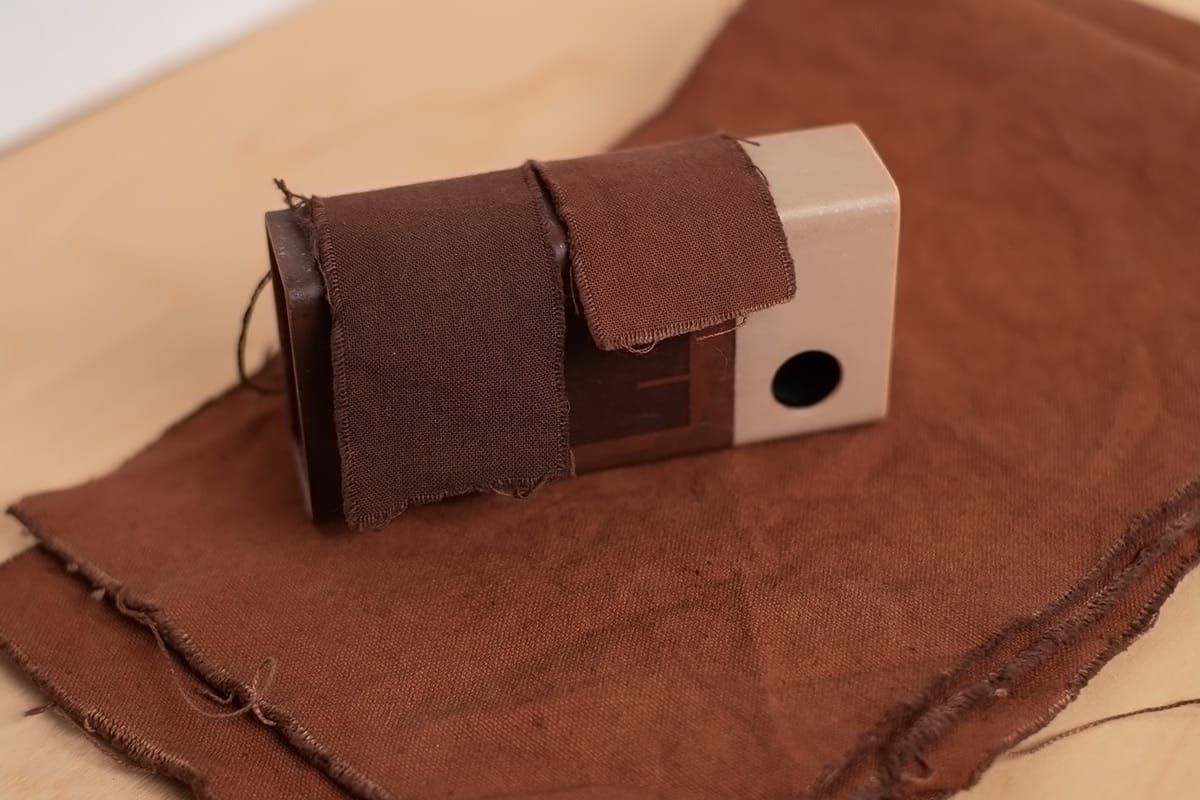
Today we're going to see the final steps leading up to wrapping these wood bodies with washi. This will conclude the machining and assembly steps on the cherry wood bodies. Apart from a few finishing touches these bodies are complete!
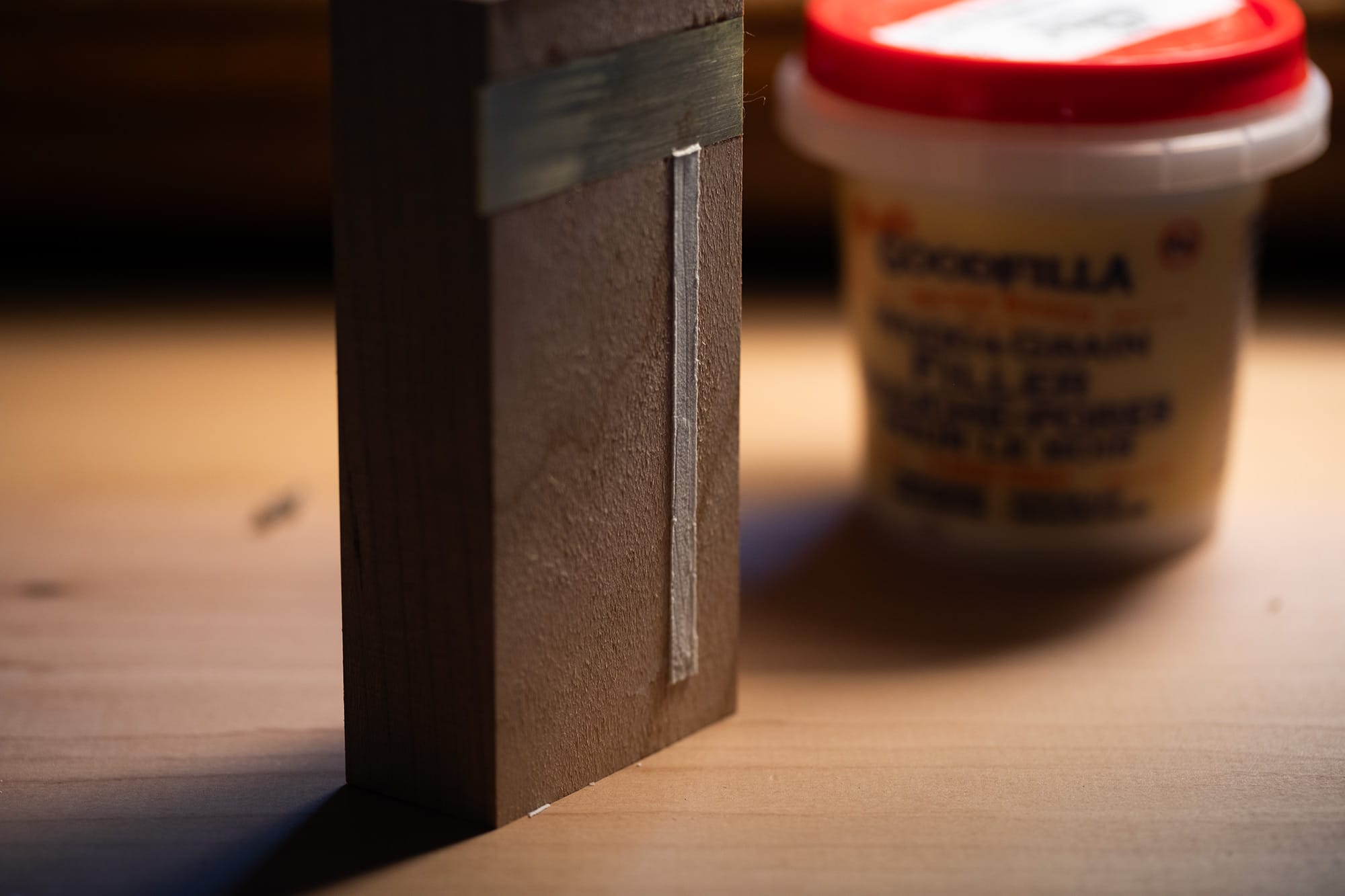
In the last issue we saw how the copper leads were soldered and embedded into the wood. Now, I'll be covering them up.
I use Goodfilla unpigmented wood filler to seal the leads in place. This filler is unique in that it's non-toxic, zero VOCs, inert.... all that good stuff. The ingredients are pretty much cellulose and calcium carbonate.
I use masking tape to keep the filler tidy. I overfill the groove so that when the filler dries and shrinks slightly it remains proud of the surface, allowing me to later sand it flush.
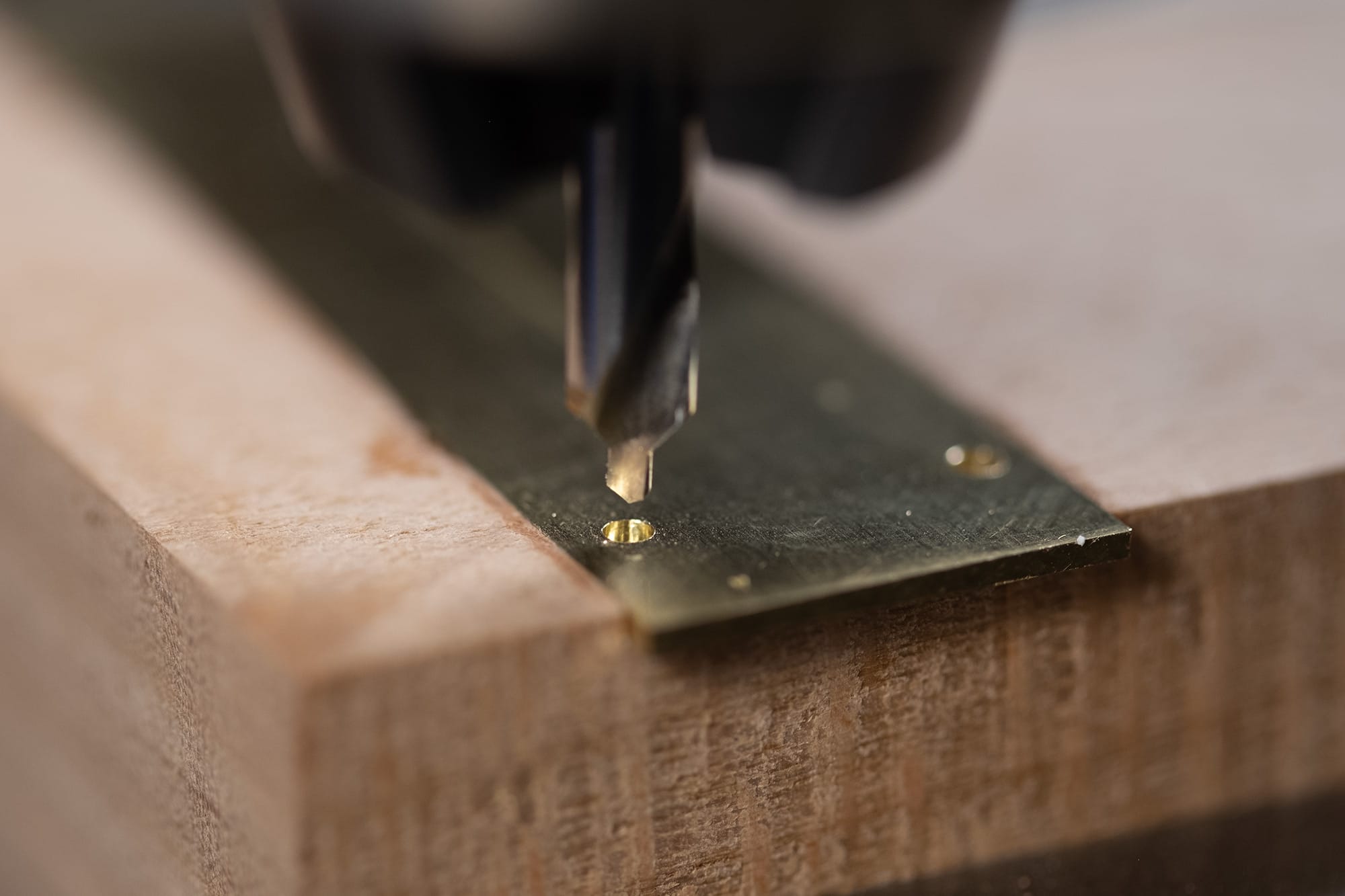
Screw holes are then drilled into the brass backing plate.
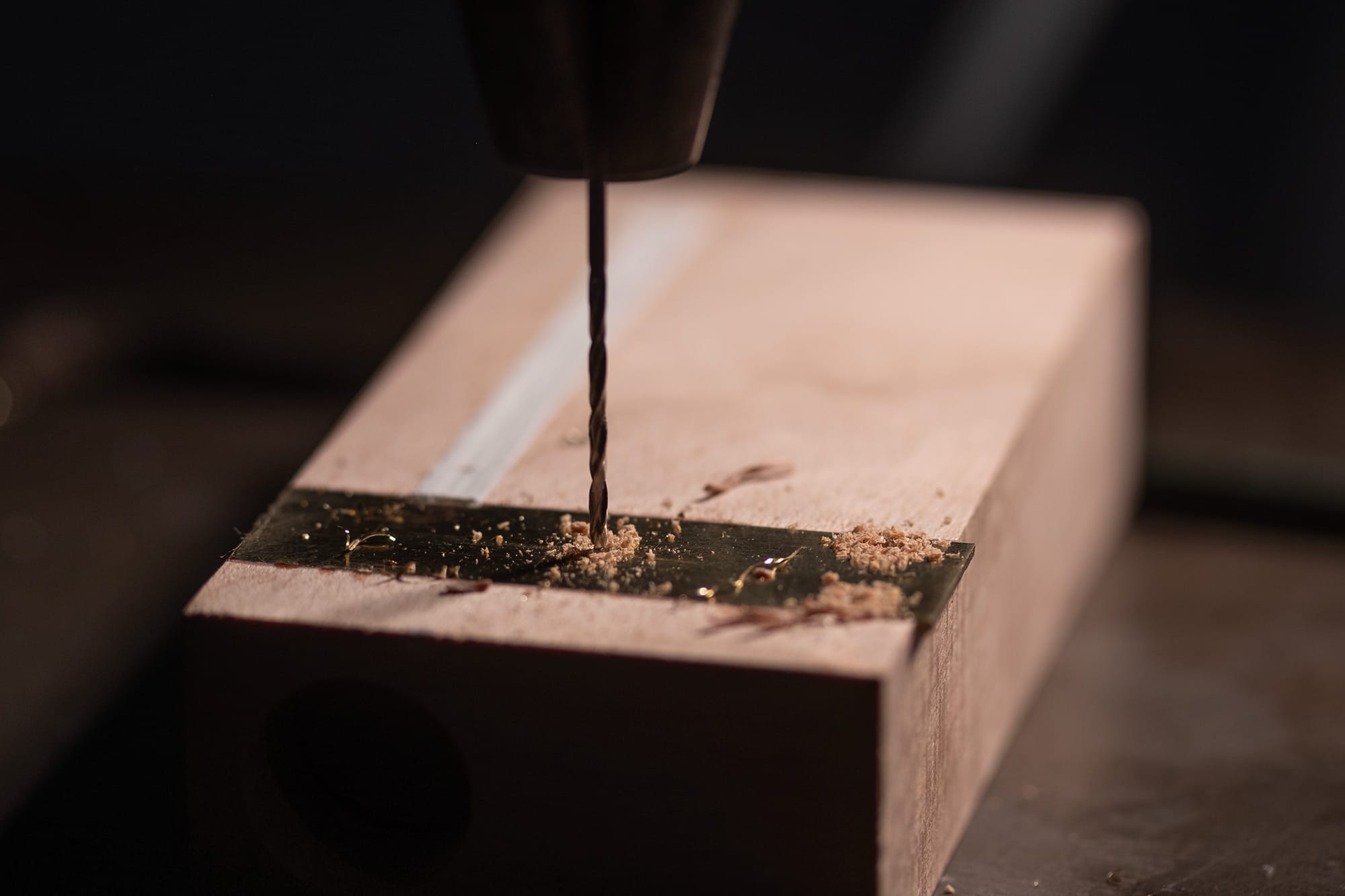
I follow up with a longer twist drill to make holes in the wood to accept 0-80 machine screws.
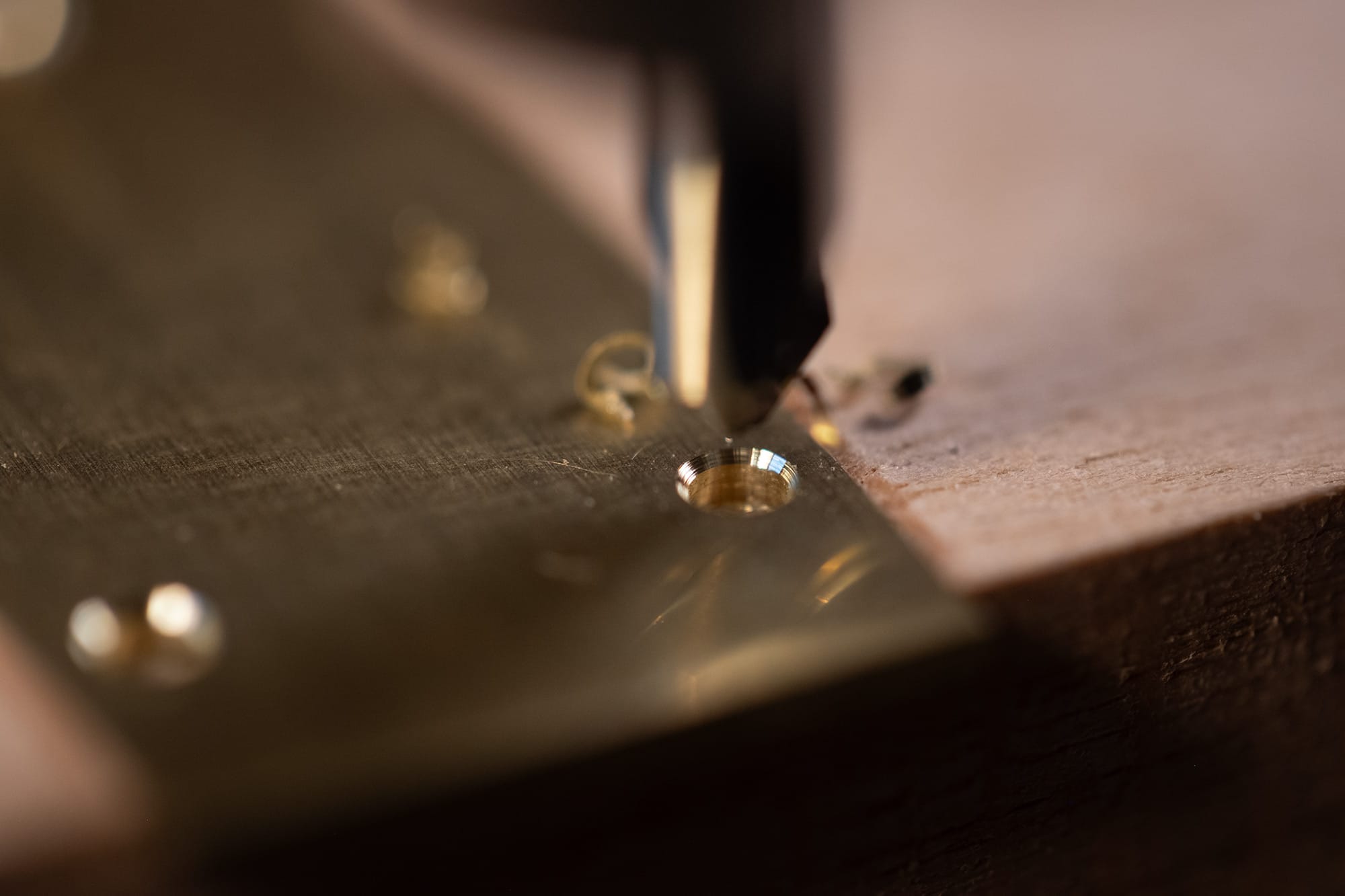
To accomodate countersunk screws I use a matching countersink bit to create a tiny chamfer on each of the mounting holes.
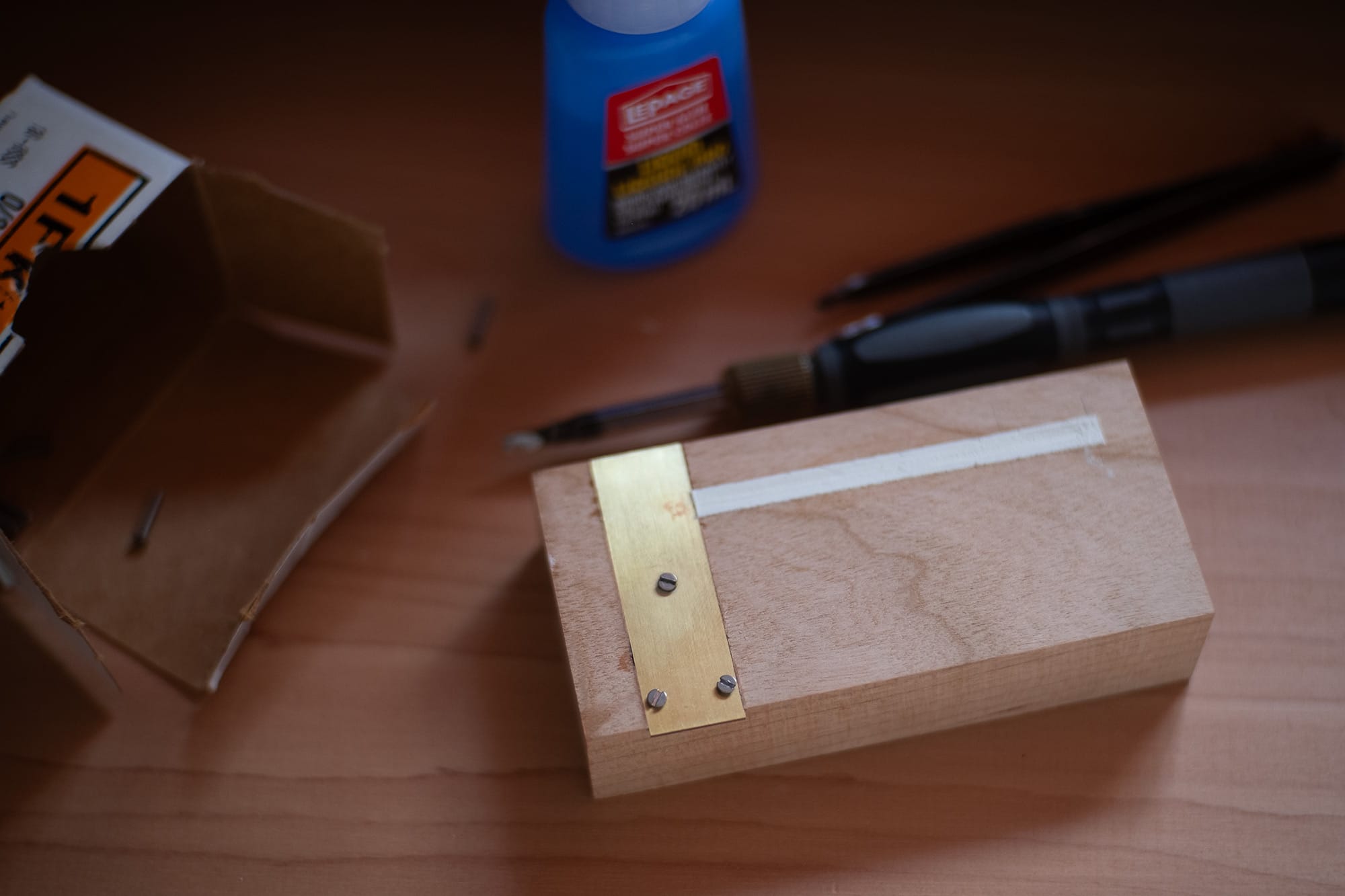
These stainless screws are attached with a dab of CA glue on the threads.
These screws go quite deep and hold the brass onto the wood with a tremendous amount of force. Remember that the inside face of the brass plate is the electrical contact inside of the button hole. Each time the button is pressed it will exert force against this plate. If I had merely glued this plate onto the wood... it's possible that in time the continued force might cause the glue to fail. The screws are a guarantee that can never happen. Once fastened you would need to physically destroy this body before you'd get them separated.
Another, almost equally important reason to use screws here, is that glue squeeze out would be almost impossible to clean from the inside of the button hole.
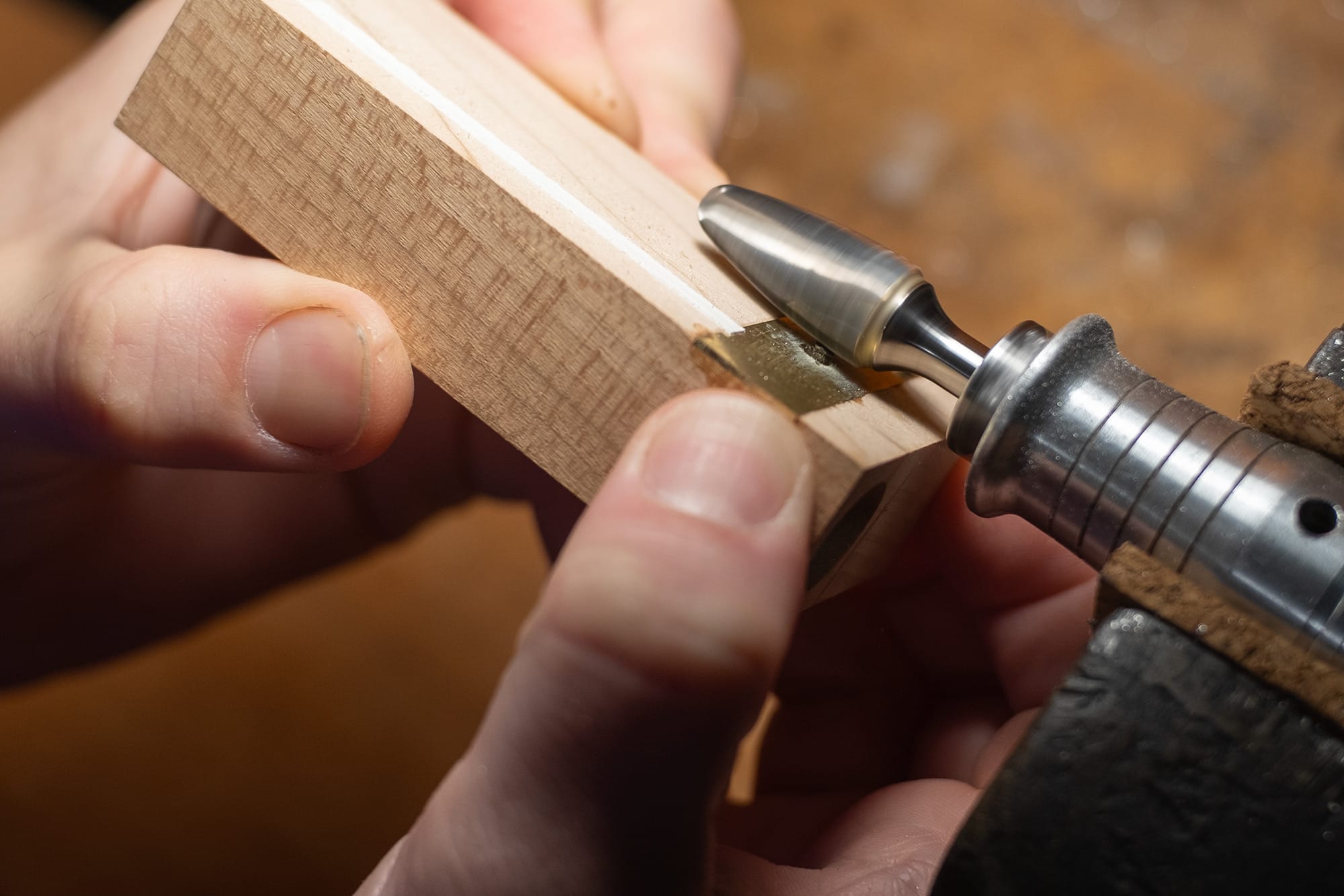
The screw heads are not fully countersunk, they sit above the surface and need to be carved away using a carbide burr.
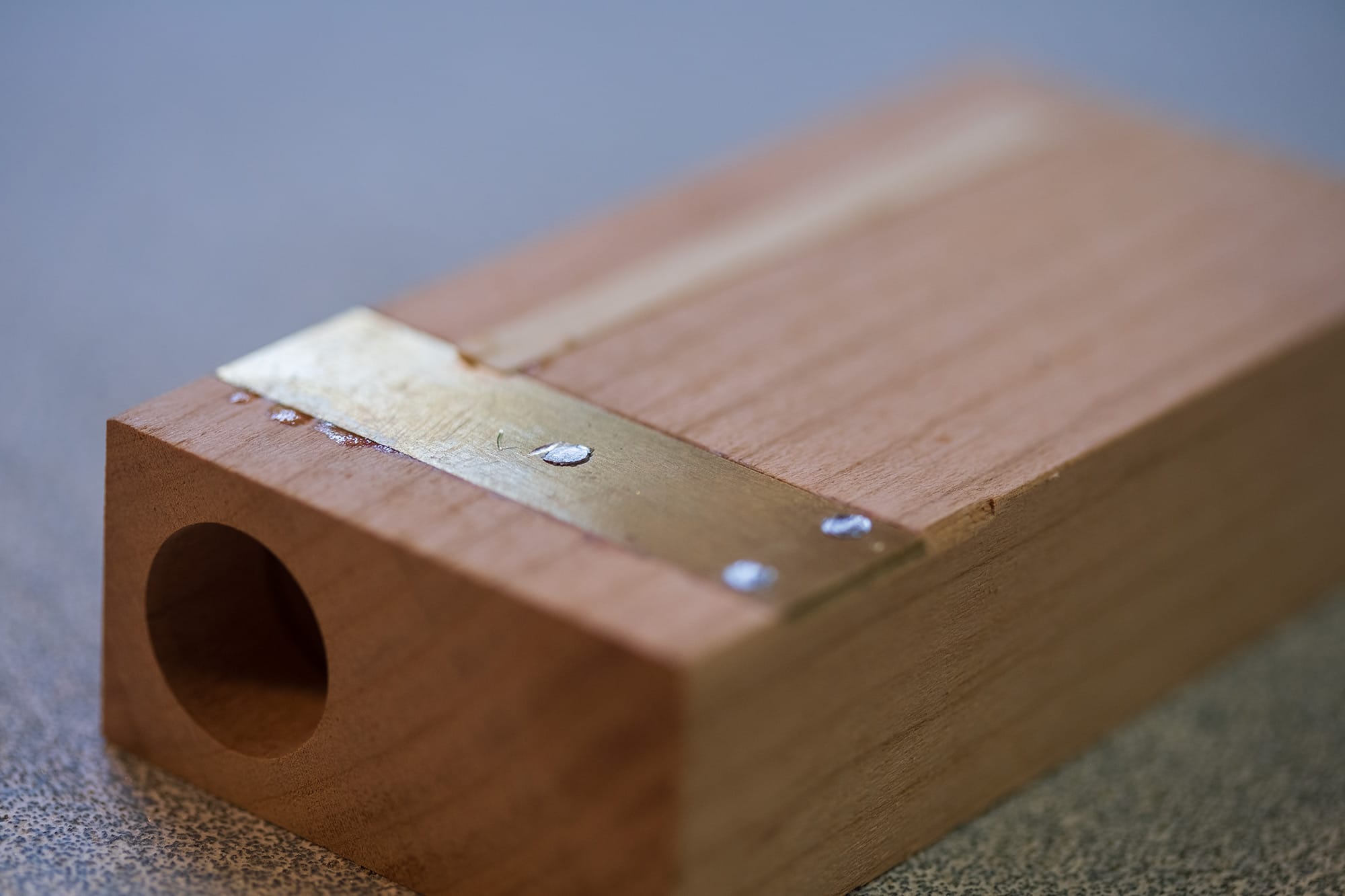
After carving the screw heads down until they're almost flush, I finish by surfacing the entire back face on a piece of sandpaper adhered to a granite plate.
This step is multifunctional. It levels the screws, brass plate, and the wood filler all in one go. I try to remove as little wood as possible. I don't want to deform the perfect rectangular block that I've worked so hard to make and maintain up till this point.
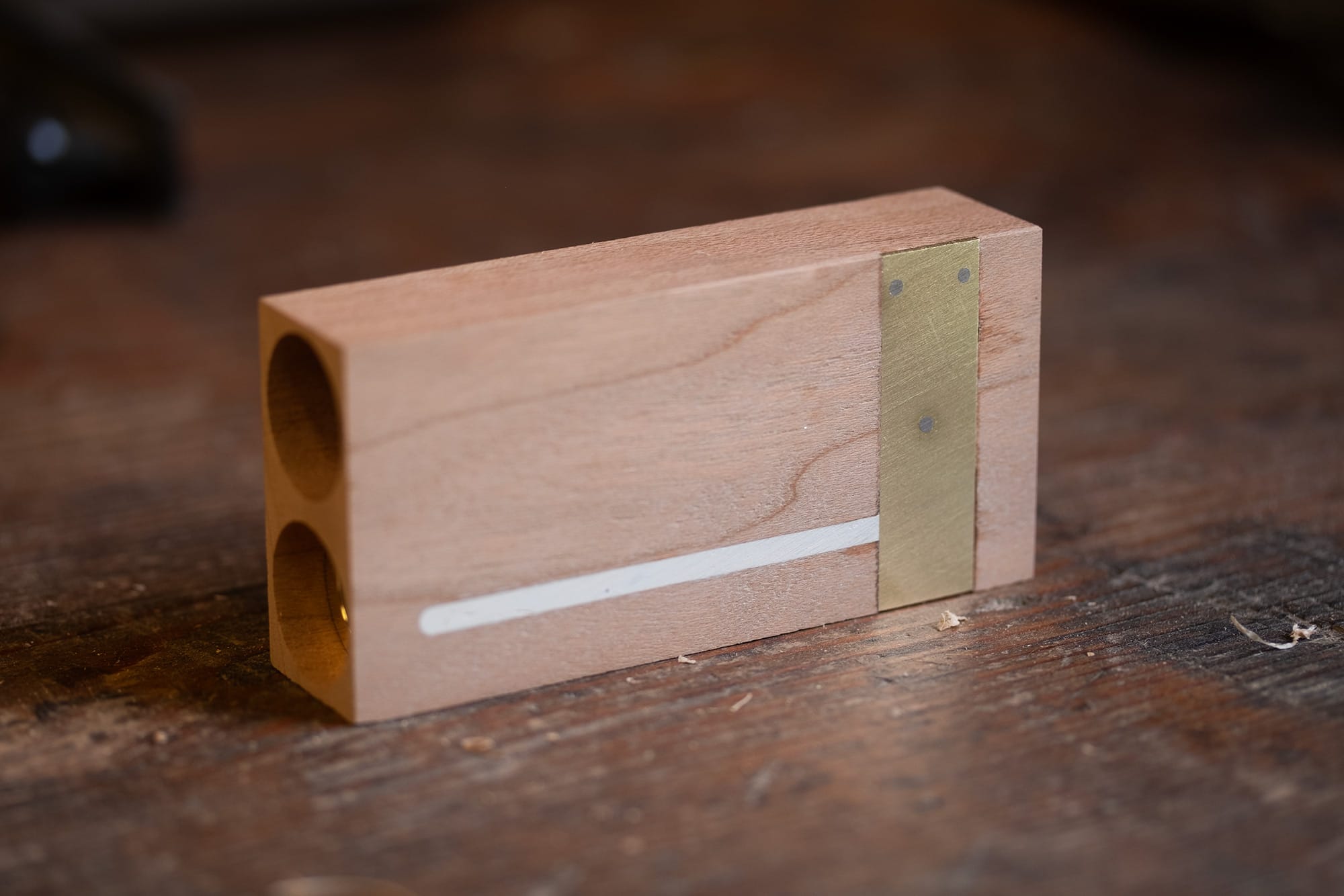
After sanding you can see how the screw heads are ground down to tiny pin heads, flush with the surface. The countersink that remains is still firmly holding the brass plate down.
I use a very rough sandpaper, 80x, for the surfacing. When sanding both wood and brass together... if medium or fine sandpapers are used, tiny brass particulates will become embedded into the adjacent wood fibers. These brass particles will be almost impossible to clean off. Below 120x or so, this doesn't seem to be an issue.
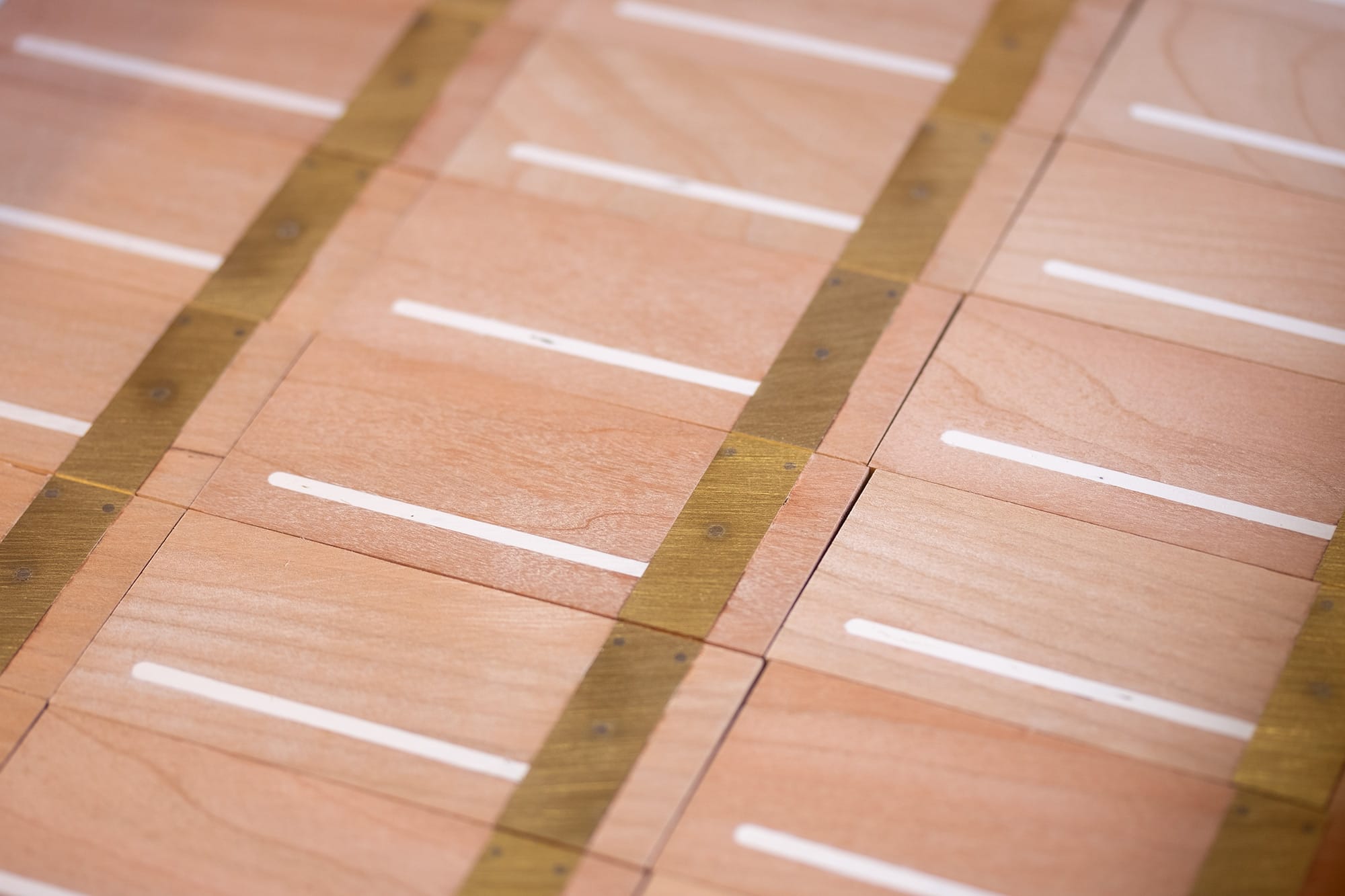
Flat backs.
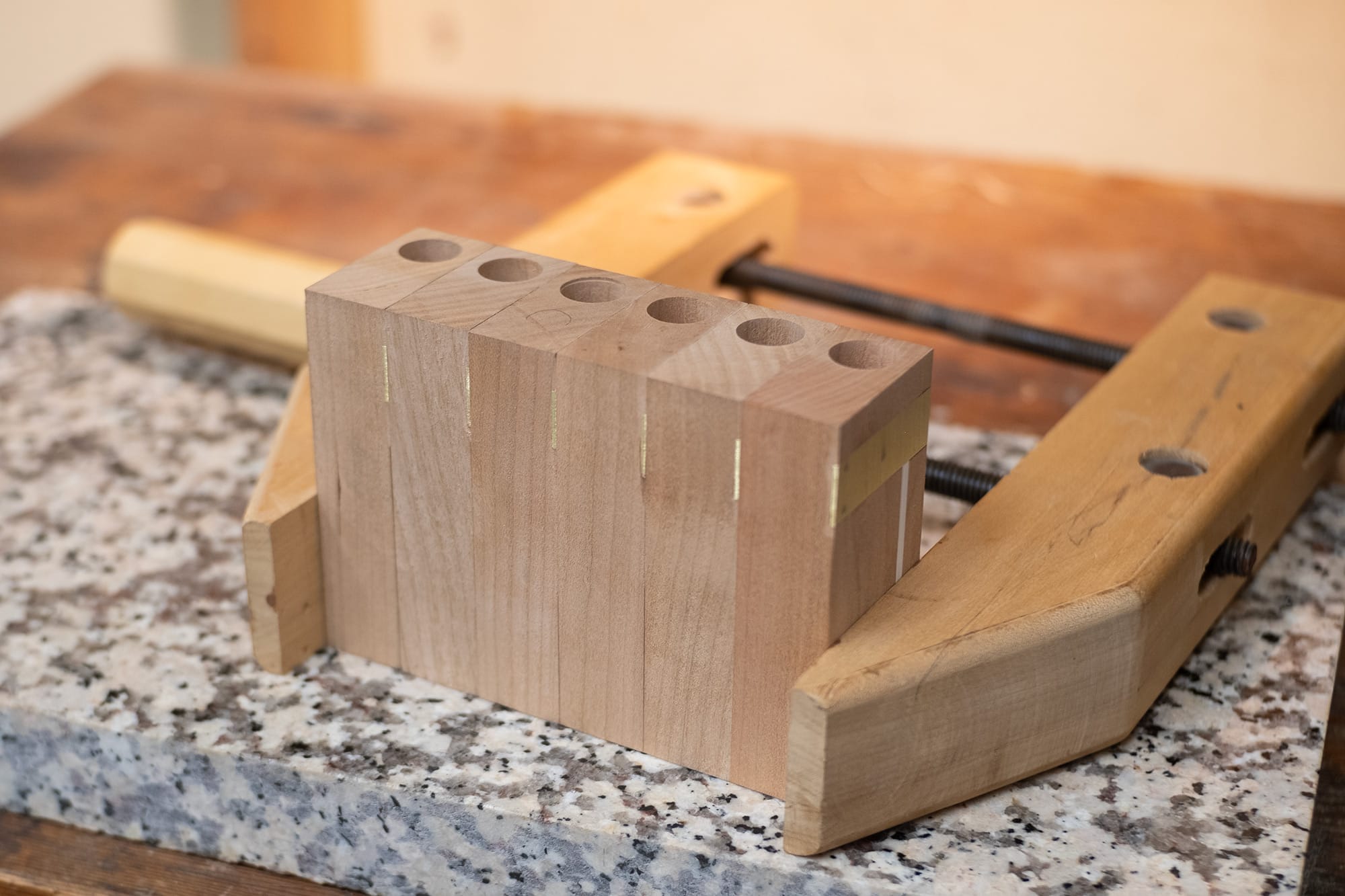
Now that the backs are all flat they can be grouped together for the next step.
I'll be sanding the bottom faces totally smooth, ready for final finish.
The bottom faces are aligned flush with each other on a granite surface before a wooden clamp is used to lock the bodies in place.
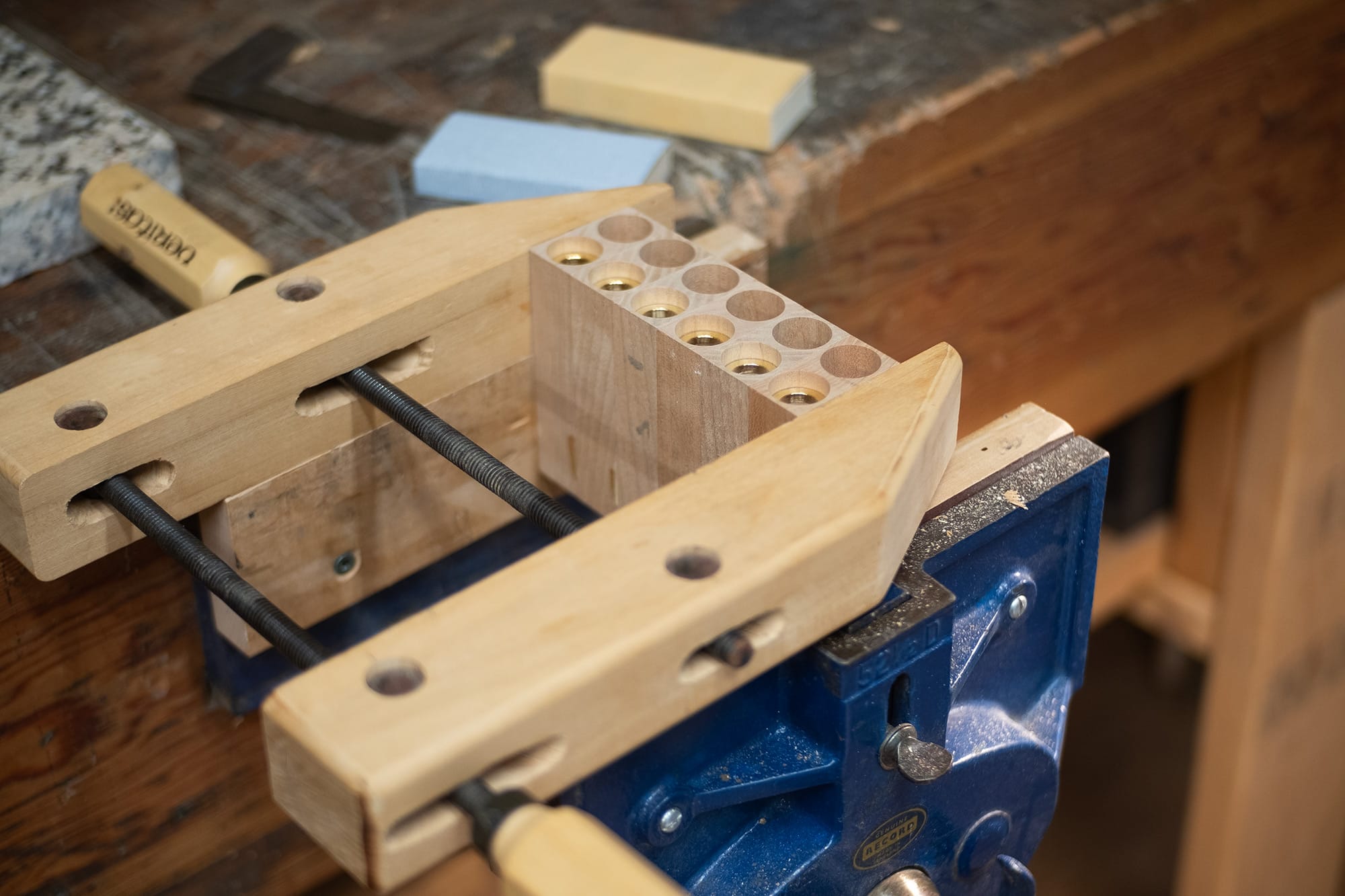
The entire assembly is transferred to the workbench vice.
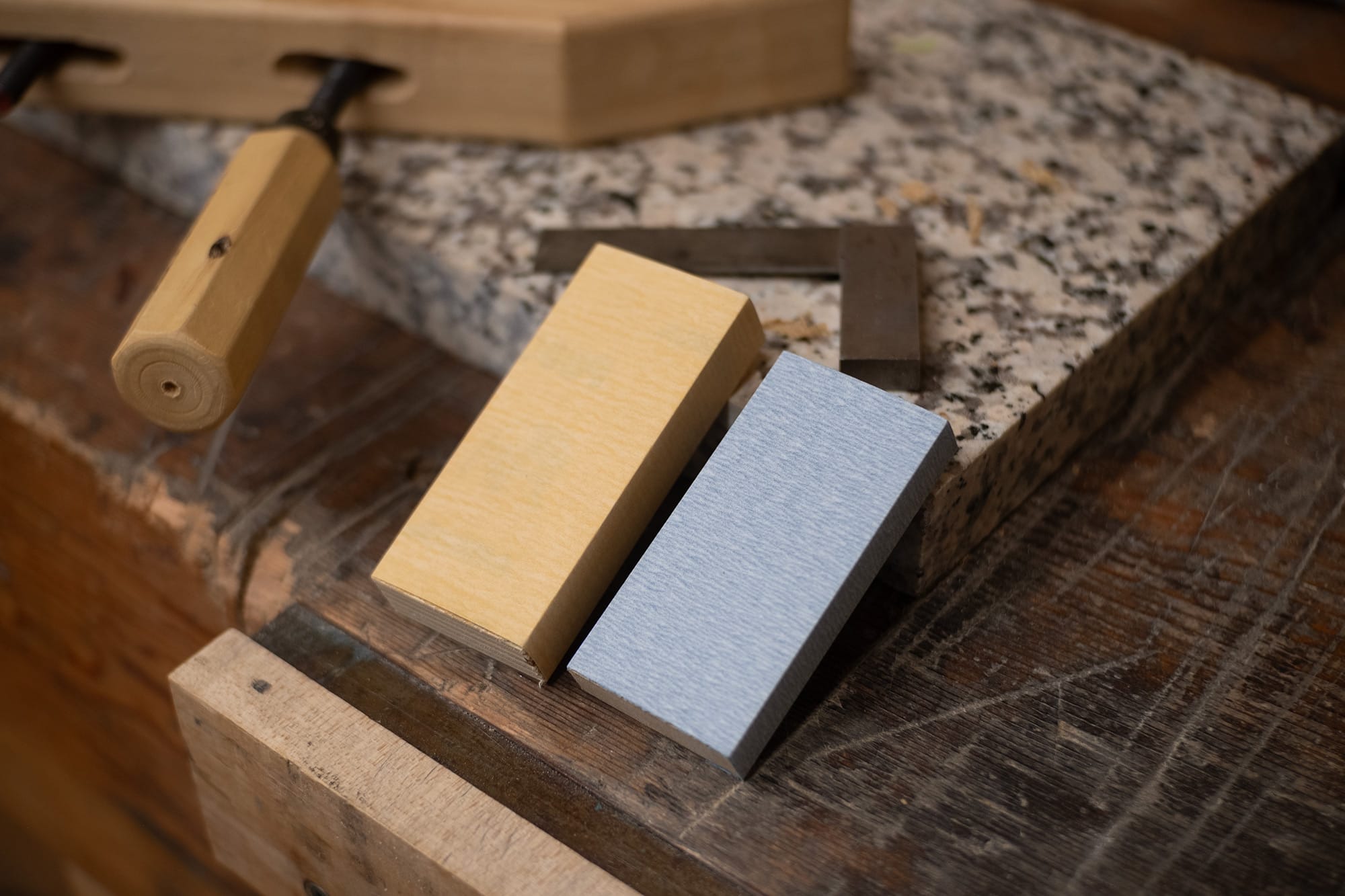
Two sandpaper blocks are prepared, 400x and 800x.
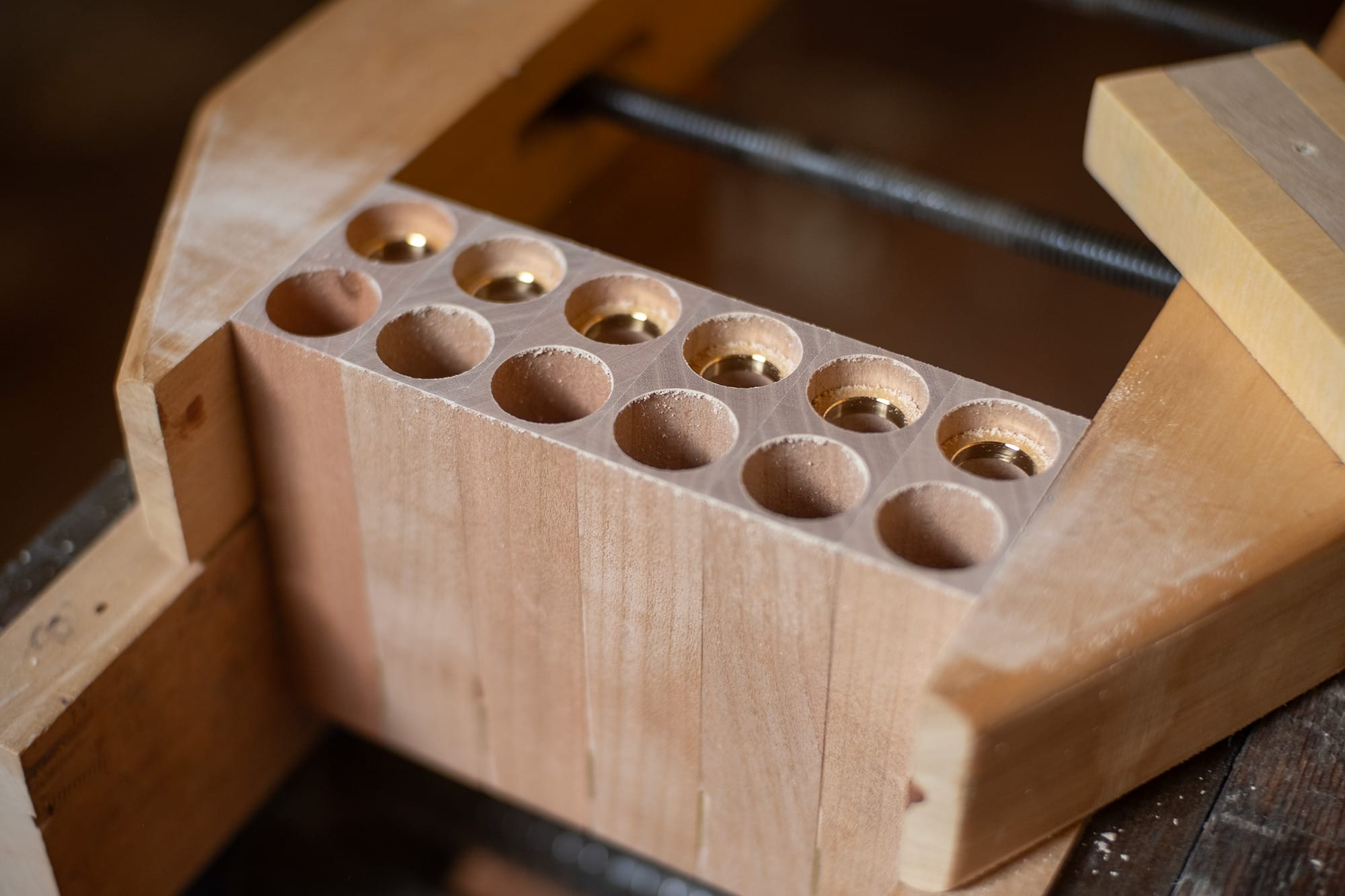
The bottoms are sanded. 800x is about perfect for the end grain of cherry.
A slot was machined down the middle. You all know what that milling machine process looks like by now.
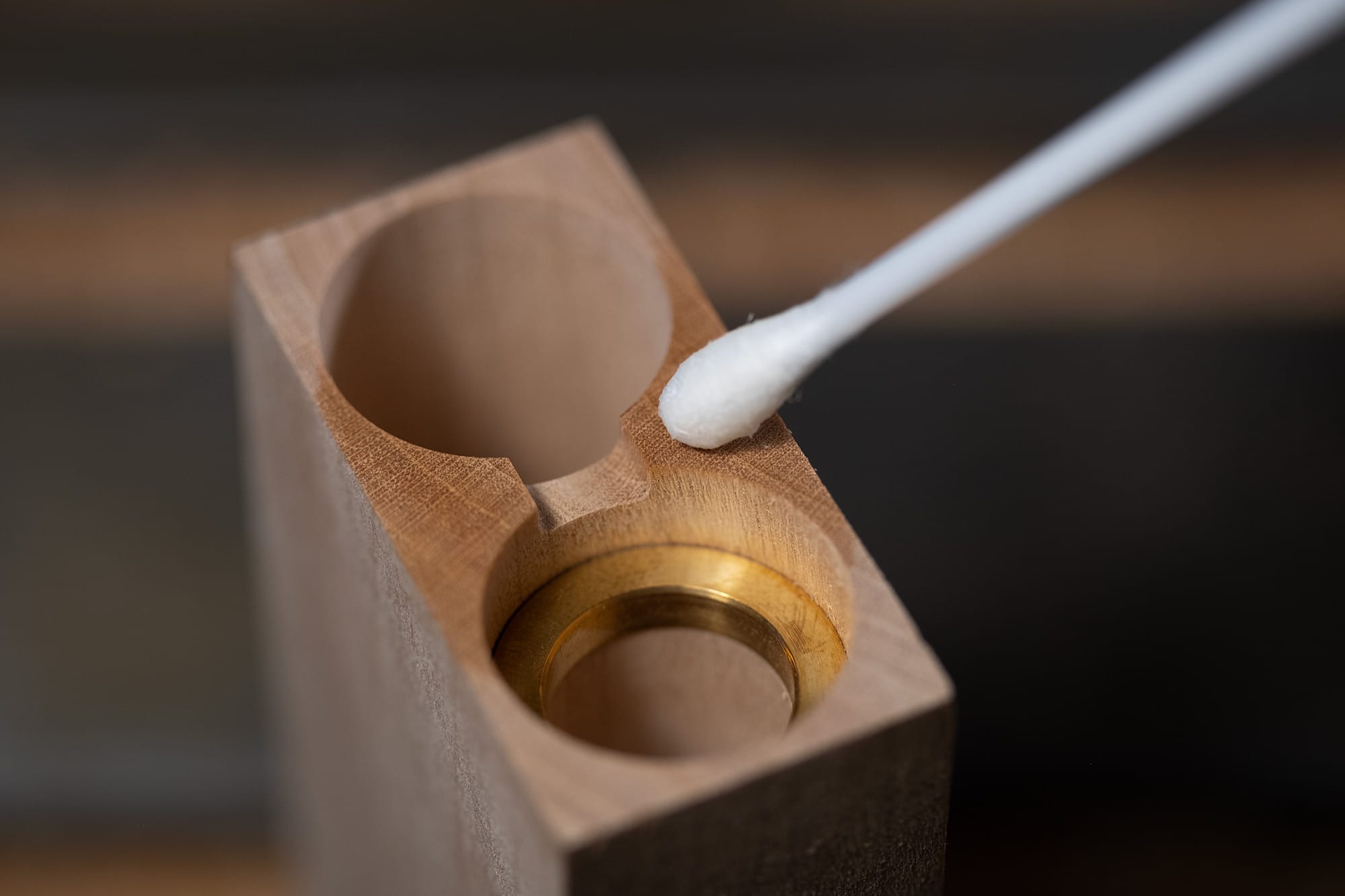
A Q-tip is used to apply a bit of paste wax to the wood, only to the areas where I'll be inserting magnets. The wax helps with glue cleanup.
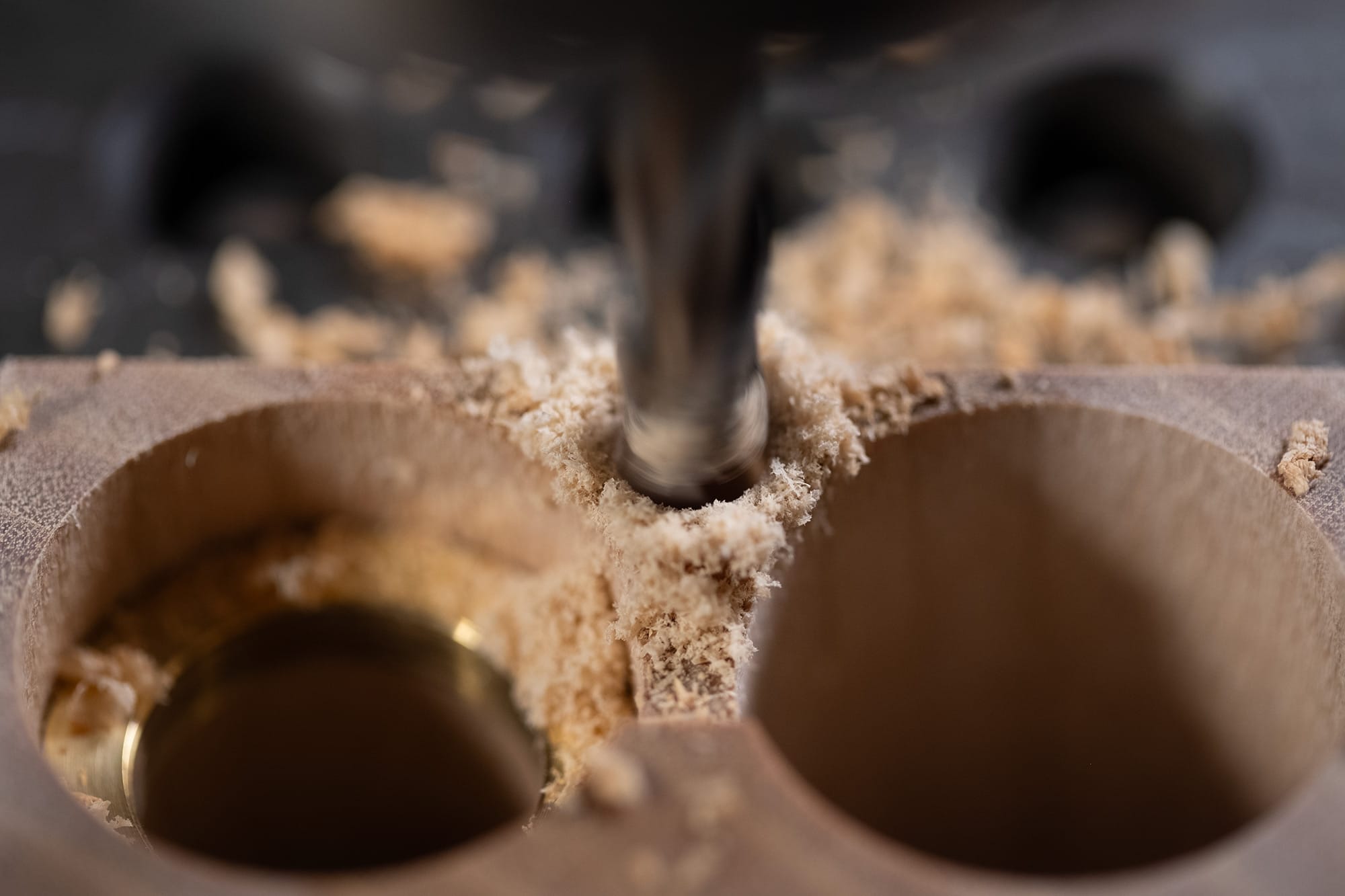
A 3/16" dia. carbide end mill is used to machine the magnet holes.
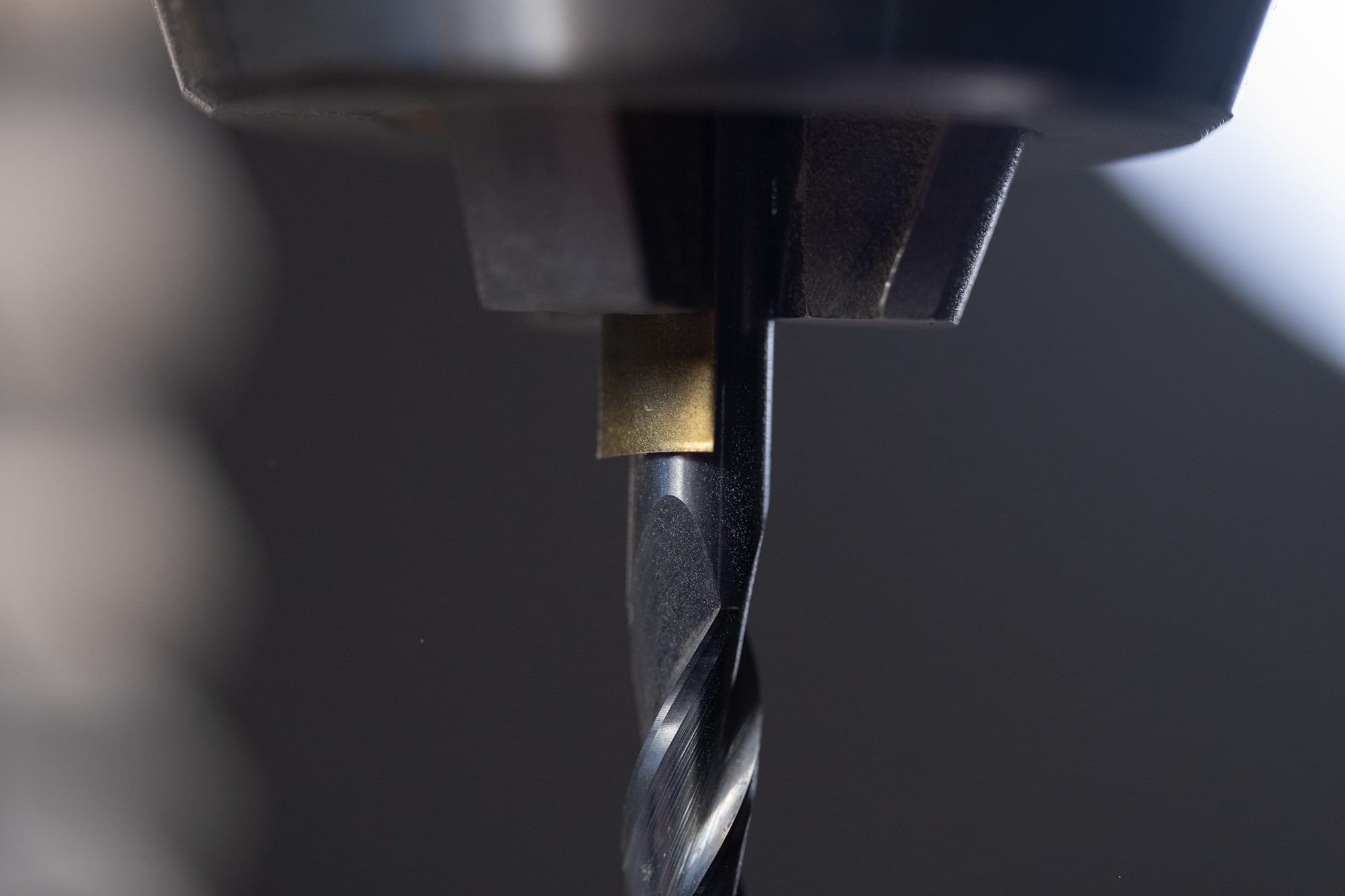
Shop tip. If you need to bore a hole a hair oversized, a .001" brass shim under one of the drill chuck jaws will accomplish this nicely.
In this case, the 3/16" end mill created a hole that was slightly too snug for my 3/16" dia. magnets. The shim solved the issue.
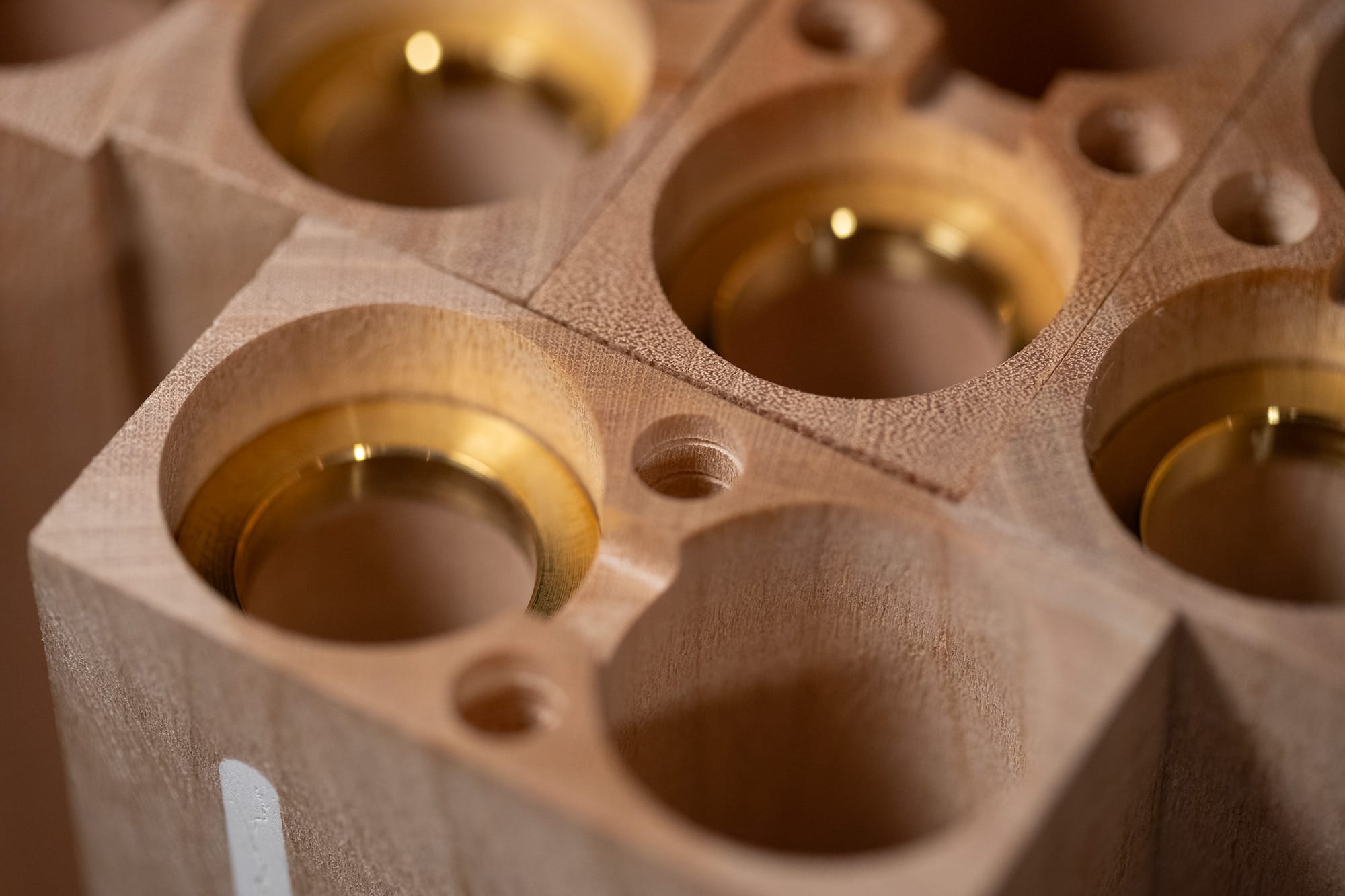
Each magnet hole is then grooved on the inside with a carving burr. The grooves give these glue joints added strength.
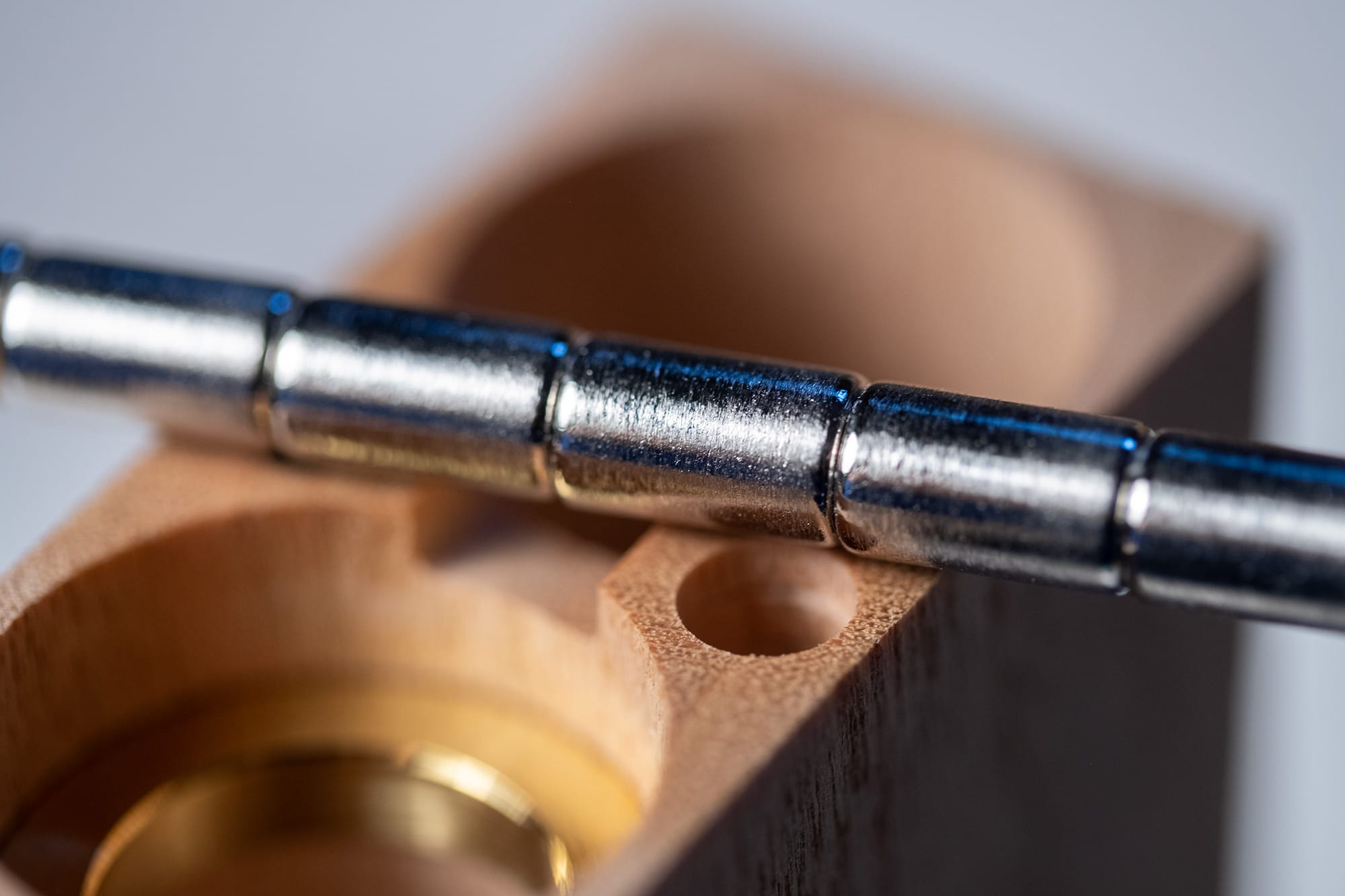
I use N52 (highest pull force) grade neodymium magnets. These come with a smooth nickel plating that needs to be sanded rough before glue-up. This really helps with glue adhesion.
Each magnet is sanded individually. The magnetic dust must be cleaned from the magnet using tape. It's very tedious.
The magnets are degreased right before gluing.
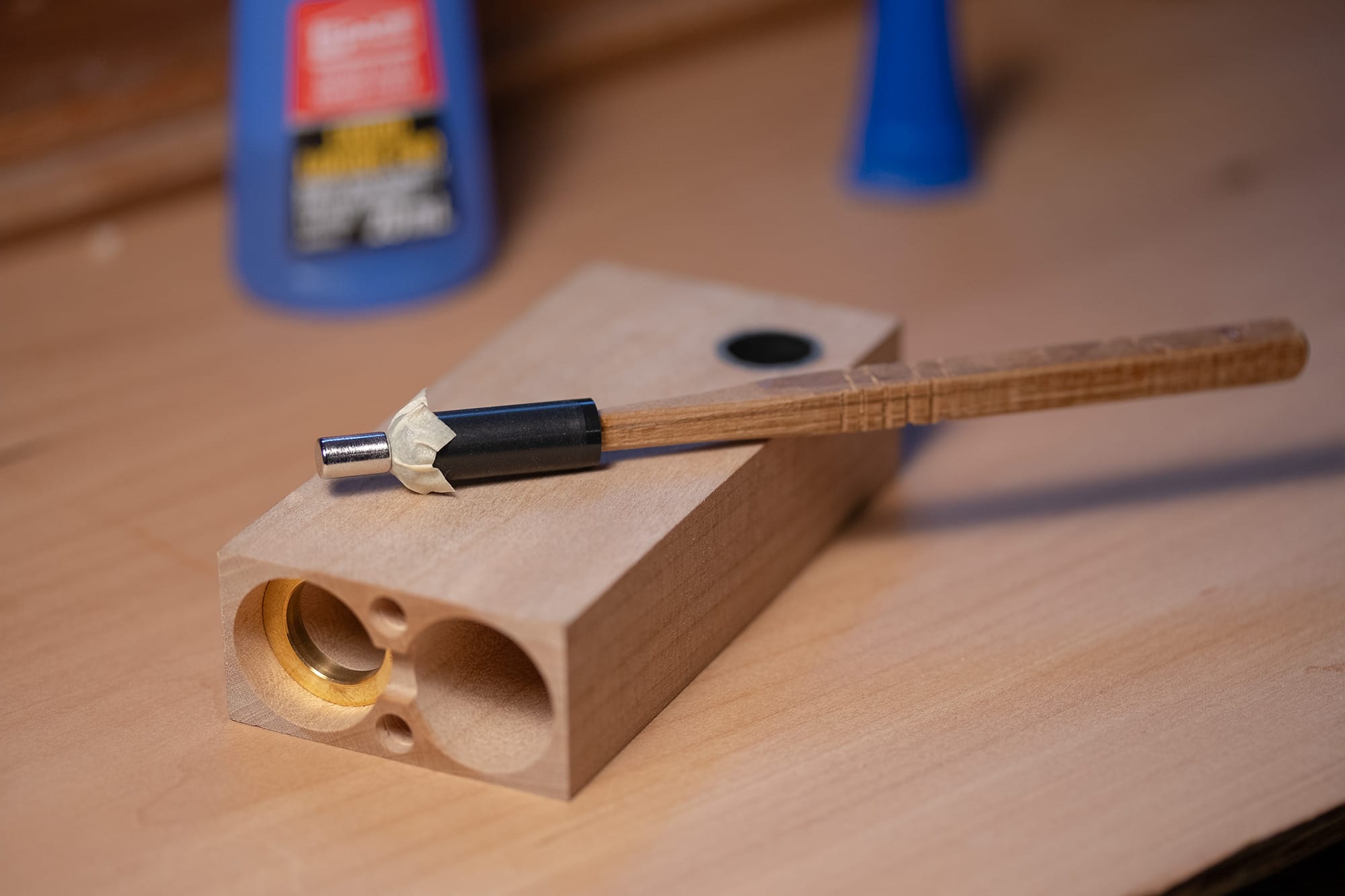
Each magnet is held with this little tool for the glue ups. The tool has a slightly magnetic tip that holds the magnets in place. The tool is covered with a masking tape 'condom' before each glue up. Any glue squeeze out sticks to the tape which can be swapped for a new piece if needed.
CA glue is used. It's proven to be reliable so long as all of the preparation steps are followed.
After gluing, squeeze out is cleaned with Q-tips and acetone. The wax that I applied in the previous step prevents glue from soaking into the end grain and creating a glue stain.
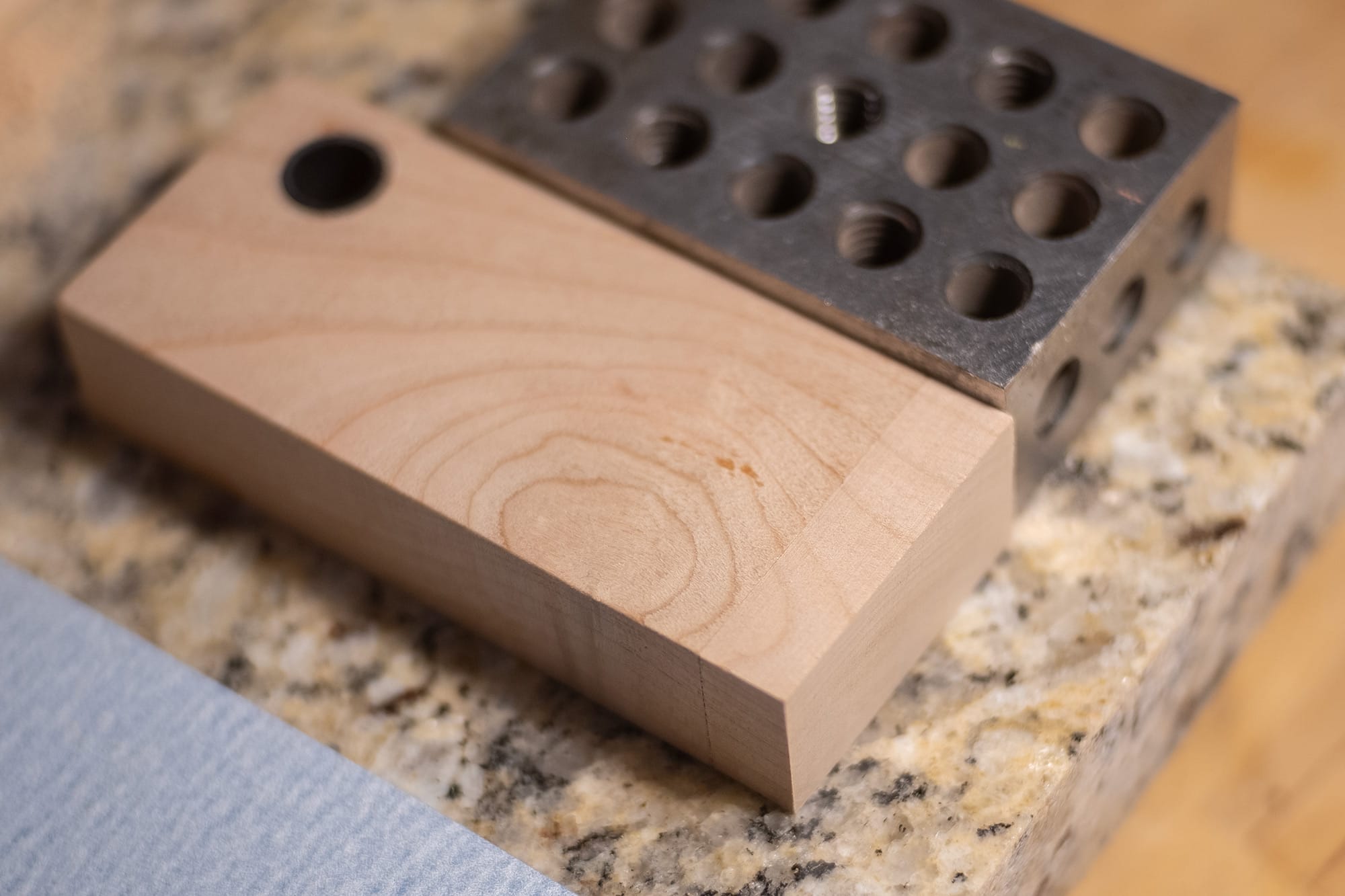
With the magnets installed, I say hello again to the matching wooden bottoms... we haven't seen these in a while!
The bodies have been through a lot... and with all that machining removing so much wood, tiny dimensional changes are unavoidable. The bodies shrink just a bit compared to the bottoms.
In this step I'm making some tweaks to the bottoms so that they match up perfectly with the bodies again. A machinist block is glue to a granite plate for a solid reference face. I use my hands to sense where each bottom is off, making adjustments until I can't feel any deviation between the two.
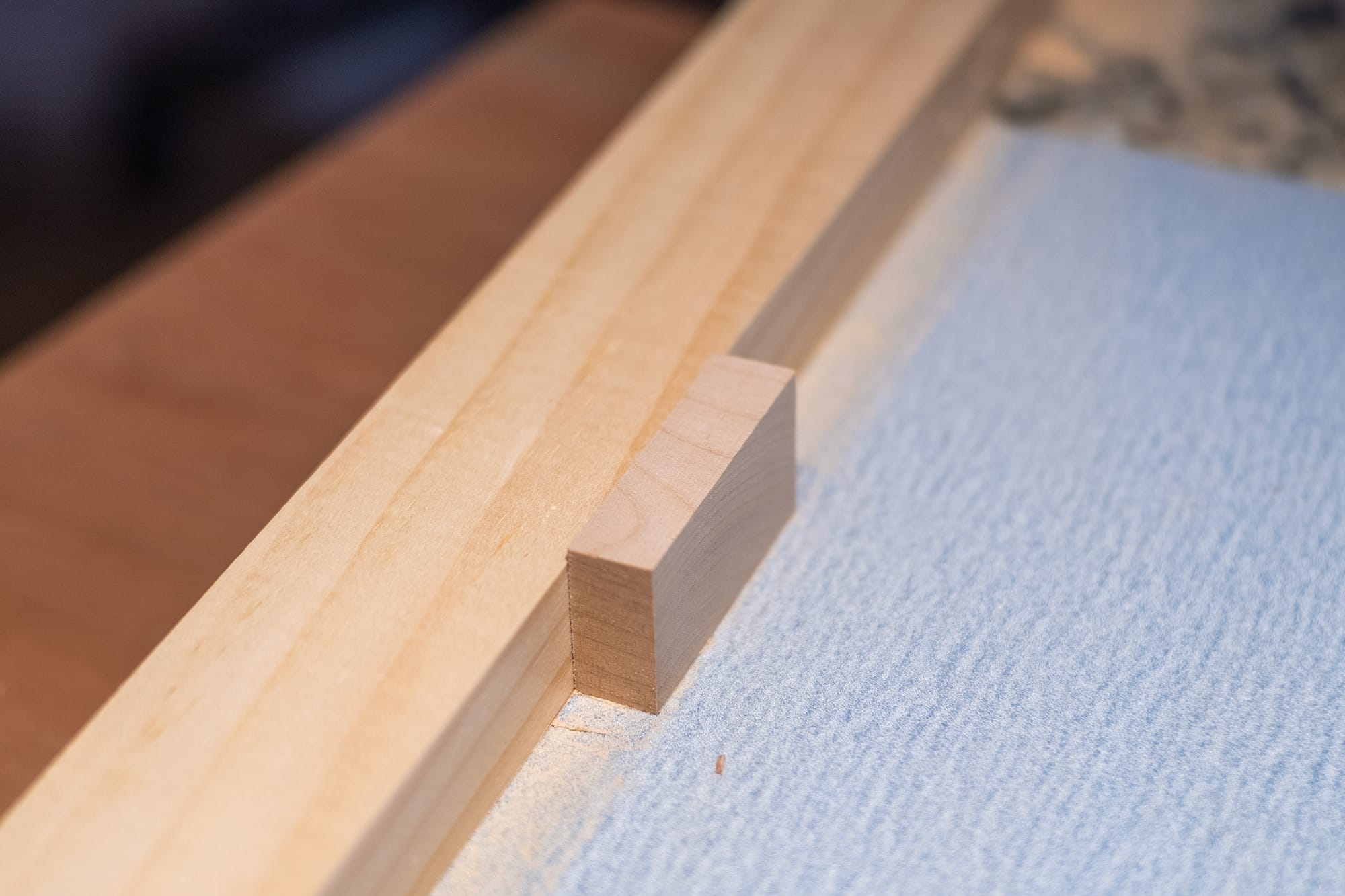
The adjustments are made with sandpaper and a 90 degree fence made from wood. The fence guides the wood so that I don't accidentally sand it out of square, something that'd be very easy to do with blocks this small.
A few strokes on the sandpaper is usually all that's needed.
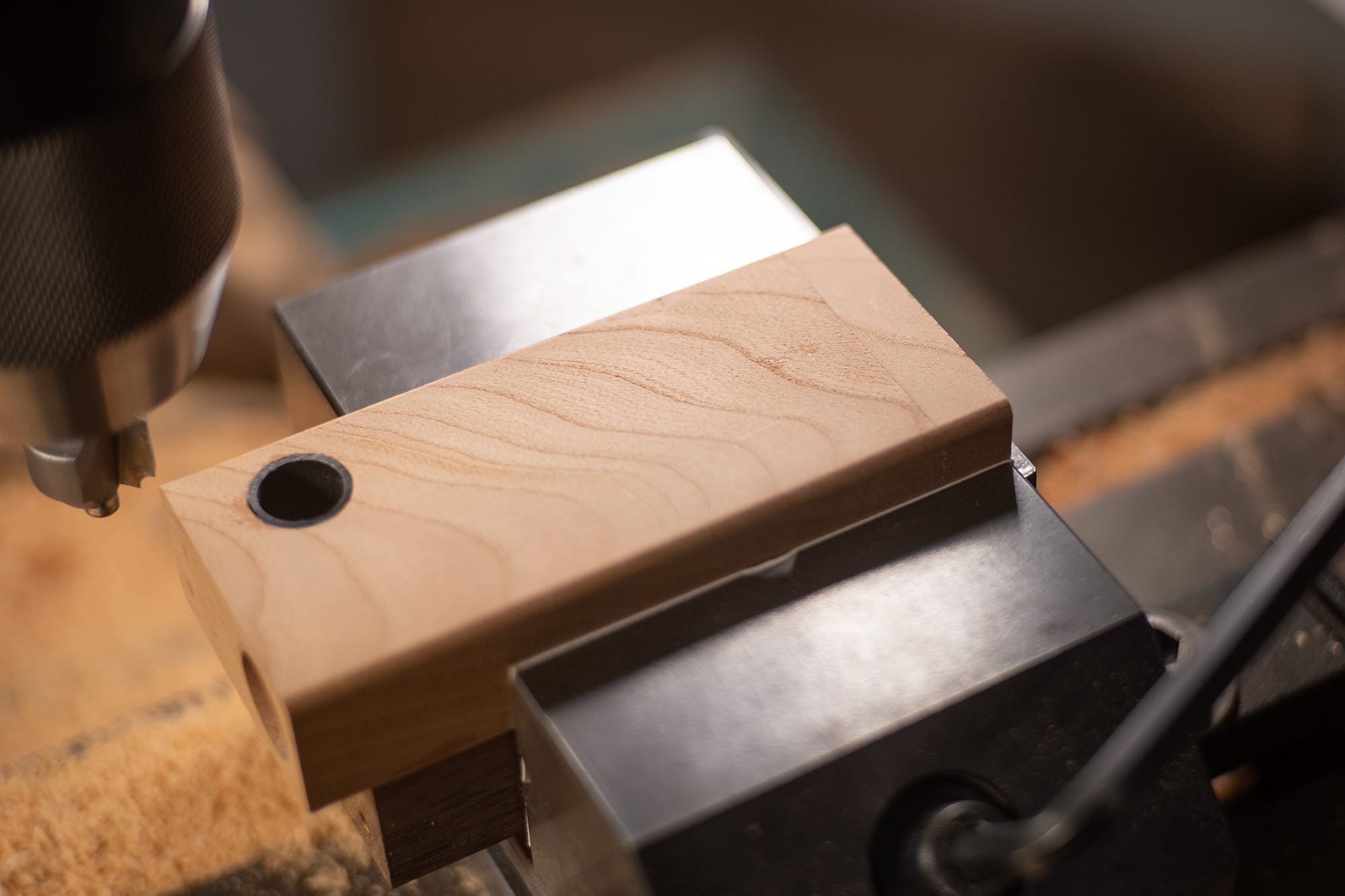
Because the bottoms are now perfectly matched again, they can be clamped together with the bodies in the milling machine for one final process.
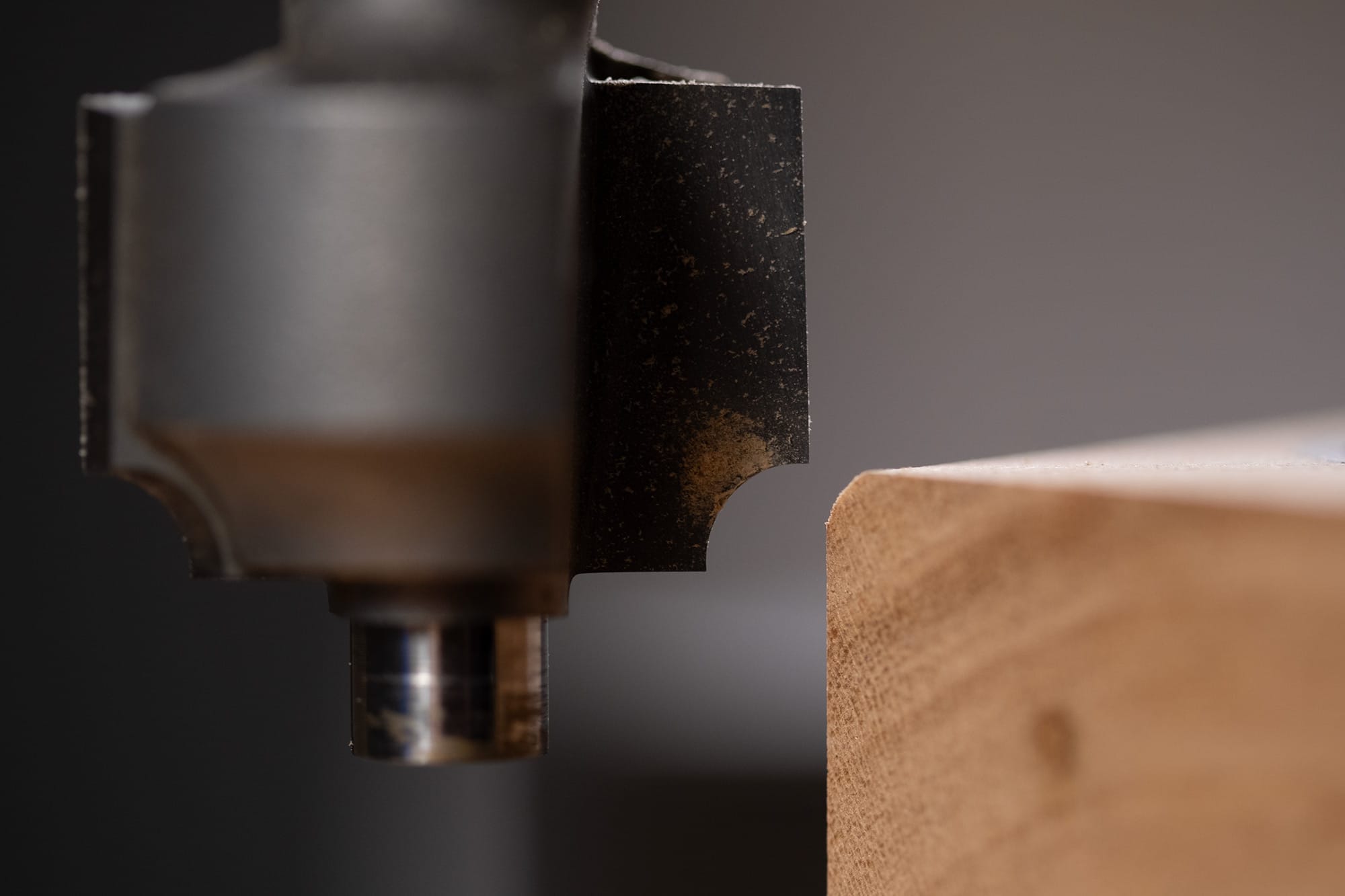
A carbide round over bit is used to create a nice rounded edge on all for corners.
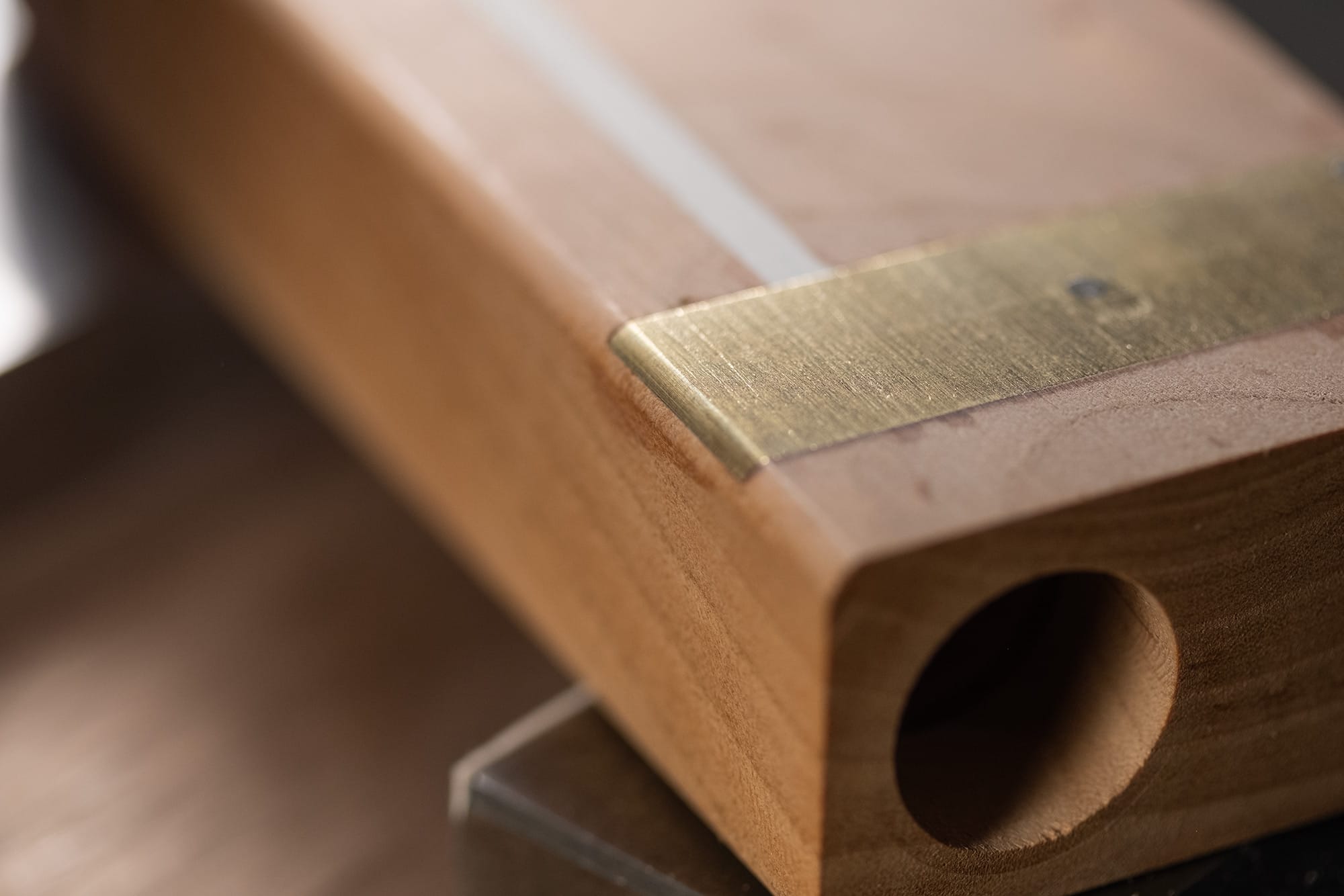
Because of the security afforded by the milling machine vice, I'm able to machine the round over in both the wood and the brass at the same time, something that would be iffy on a router table feeding by hand.
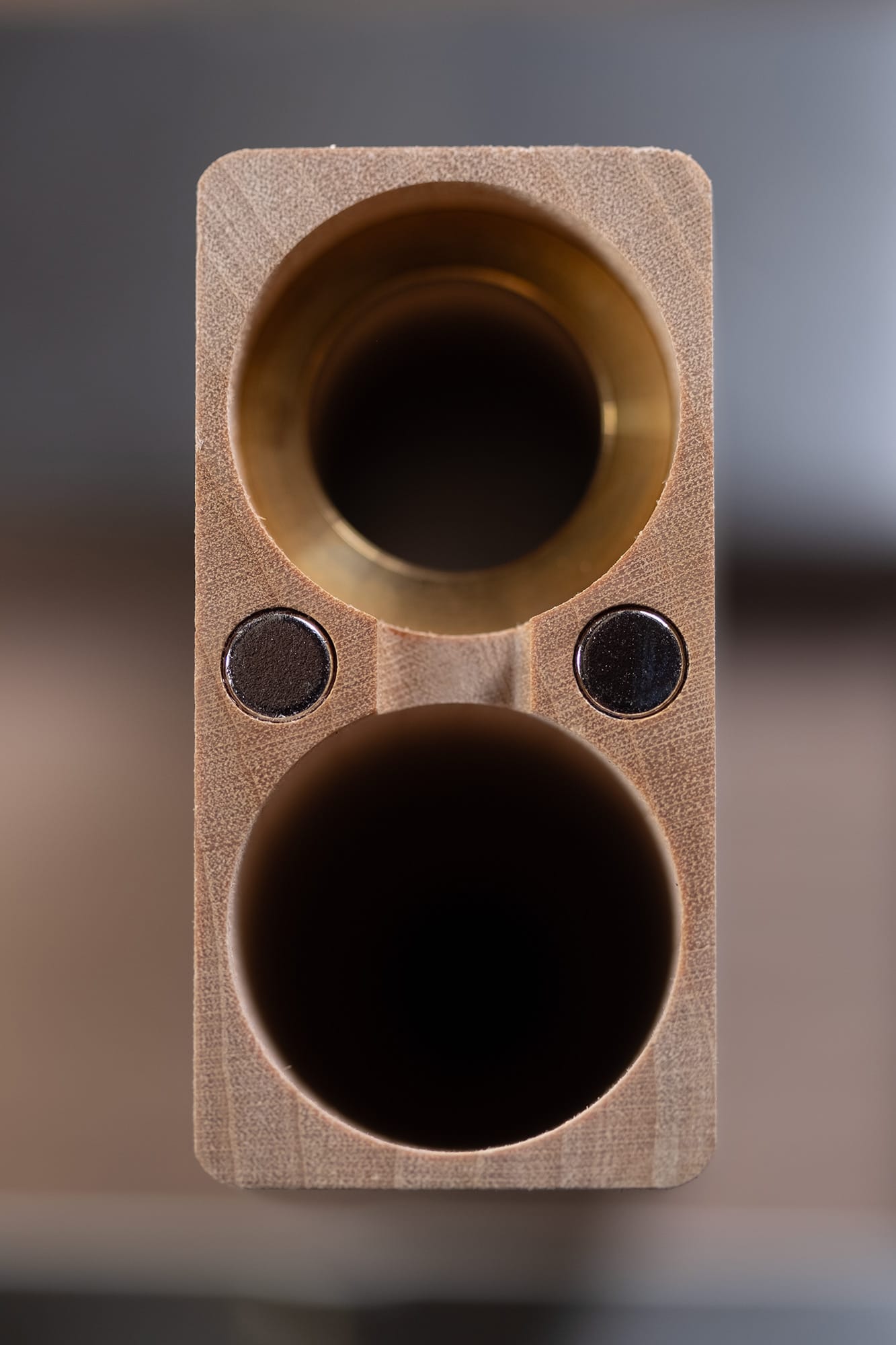
A close look at the bottom face.
So that's it, that's the bodies completed and ready to wrap with washi.
The next steps will all be washi related, a welcome change of pace! The bulk of the work is now complete, and I'm very much looking forward to sharing the hand painting with you all!