Toad Craft 01
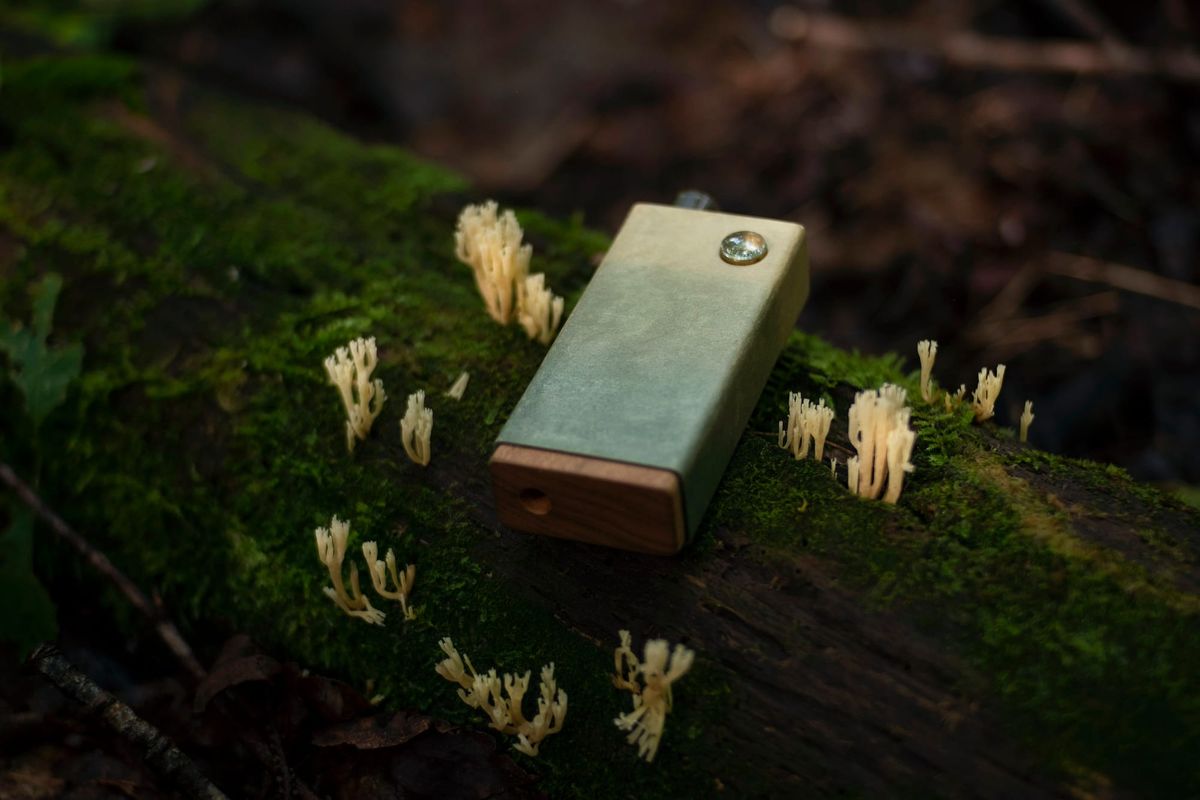
In this first update, we'll be taking a rough chunk of wood and turning it into a precision rectangular block that'll eventually birth a Toad.
It starts with the tree, black cherry in this case. I buy rough timber locally and store it for a while so the wood feels accustomed to it's new environment.
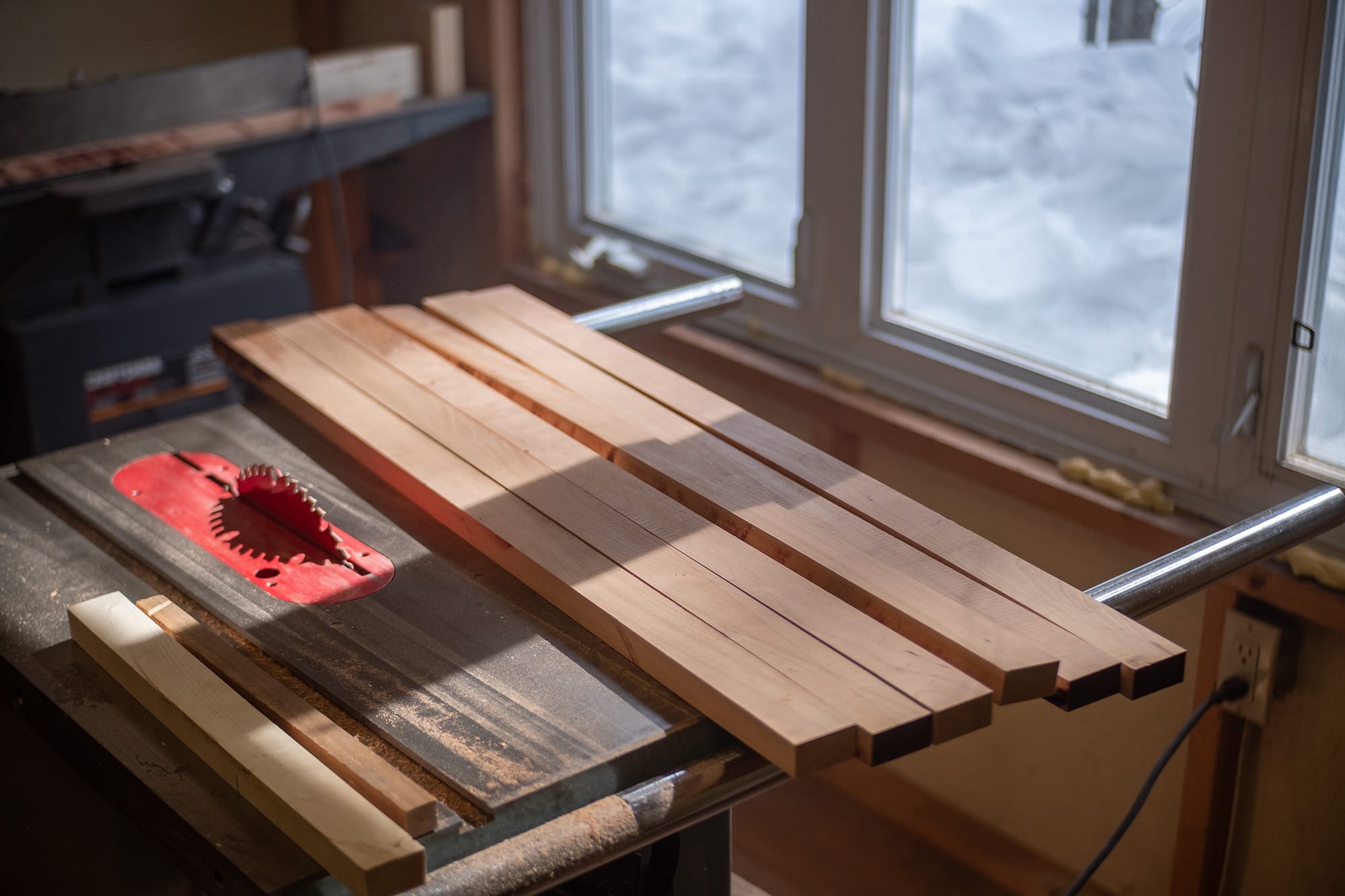
Last winter these strips were ripped.
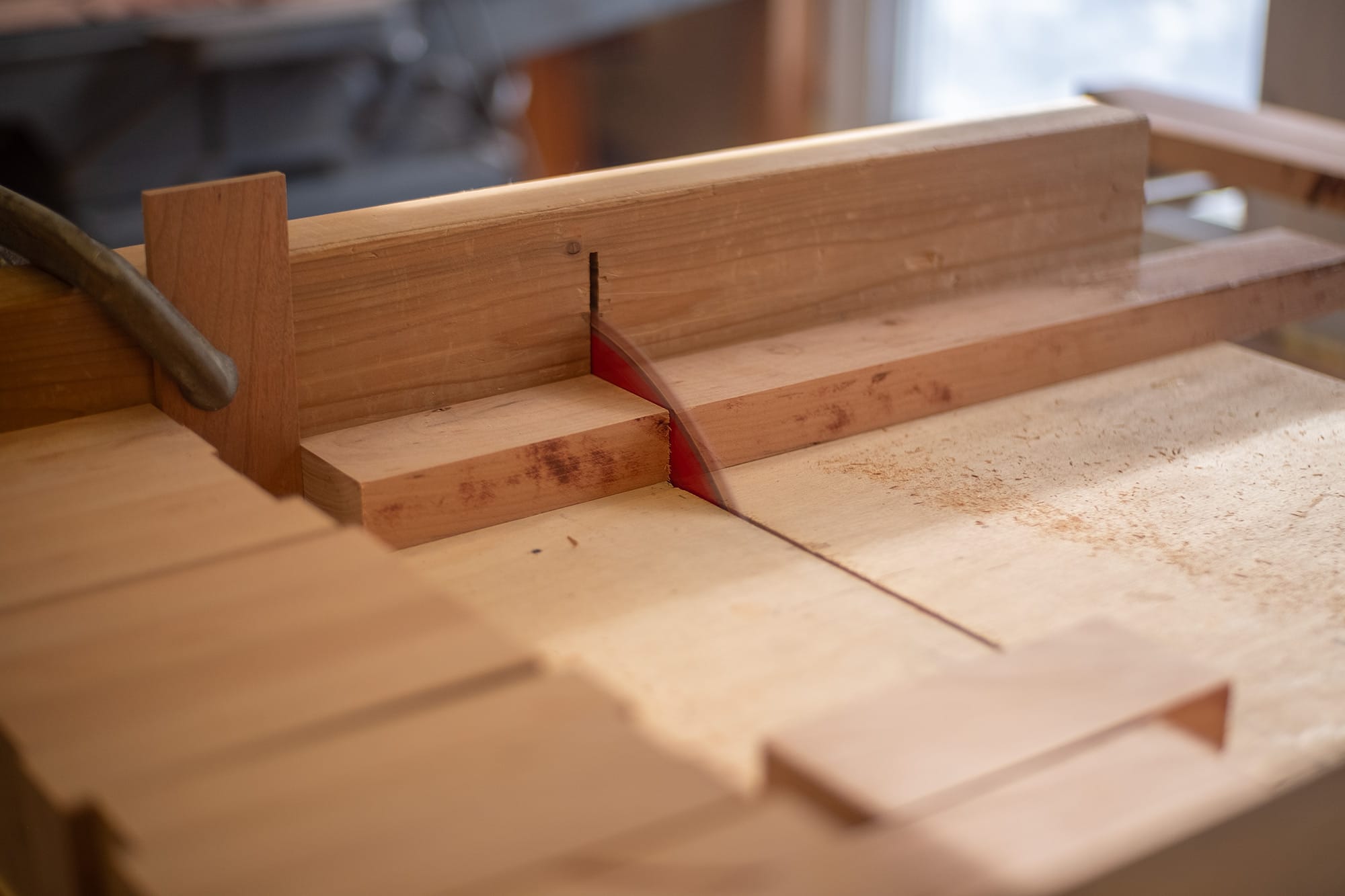
And chopped up into blocks.
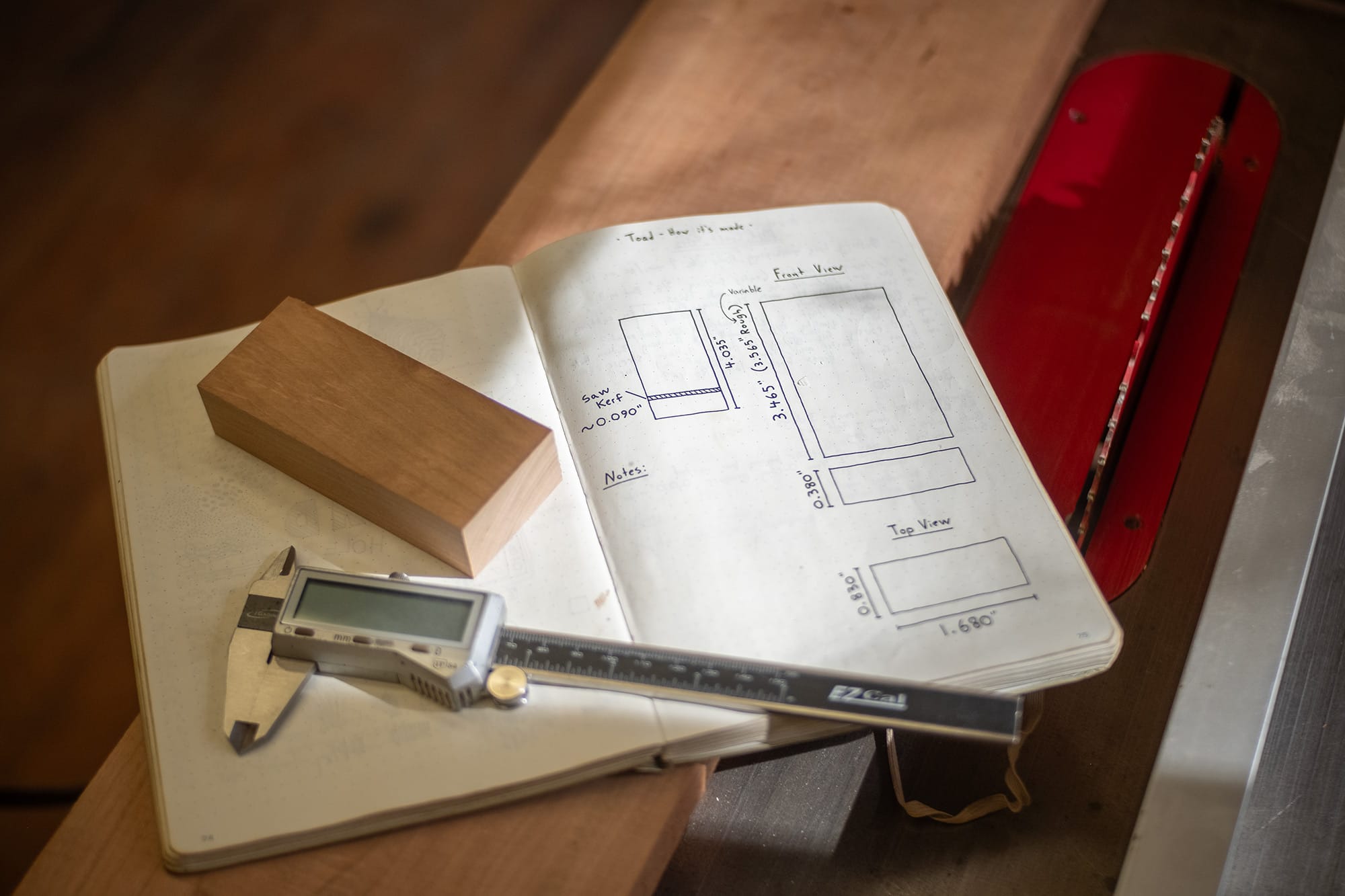
These blocks sat for months through variations in humidity, until they settled down and stopped changing size/shape. This seasoning process is very important. A fresh cut block will move quite a bit initially. Some woods do this more than others, cherry is somewhere in the middle, fairly stable.
All of my Toad measurements are held in a single notebook.
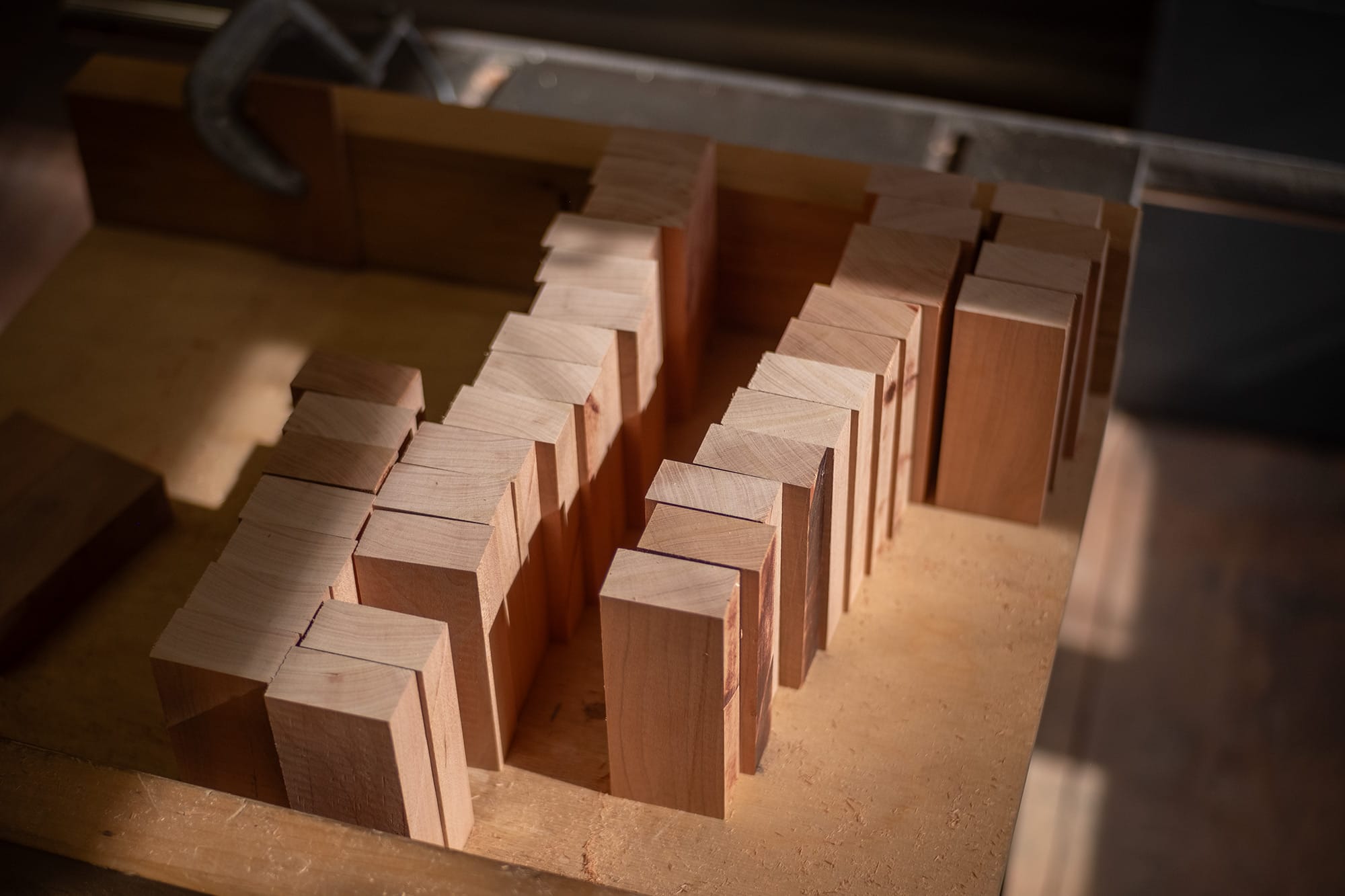
I first sort the blocks and get rid of any bad apples.
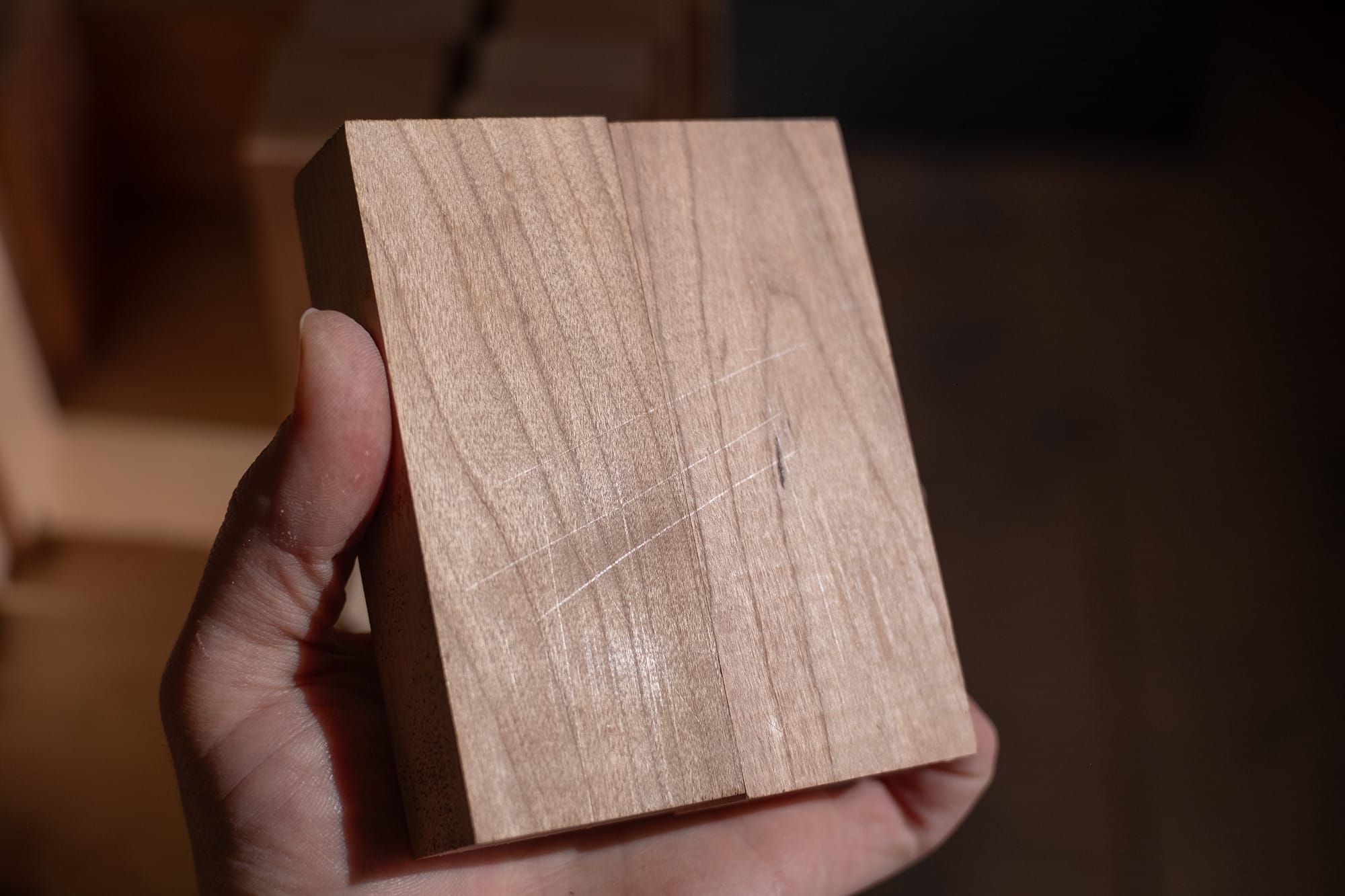
I check the density of some questionable blocks with my fingernail. Deeper grooves reveal softer sections of wood that might cause me issues down the road. I only keep the blocks that are perfect, it's not worth encountering cracks or soft spots down the line after sinking hours of work into it.
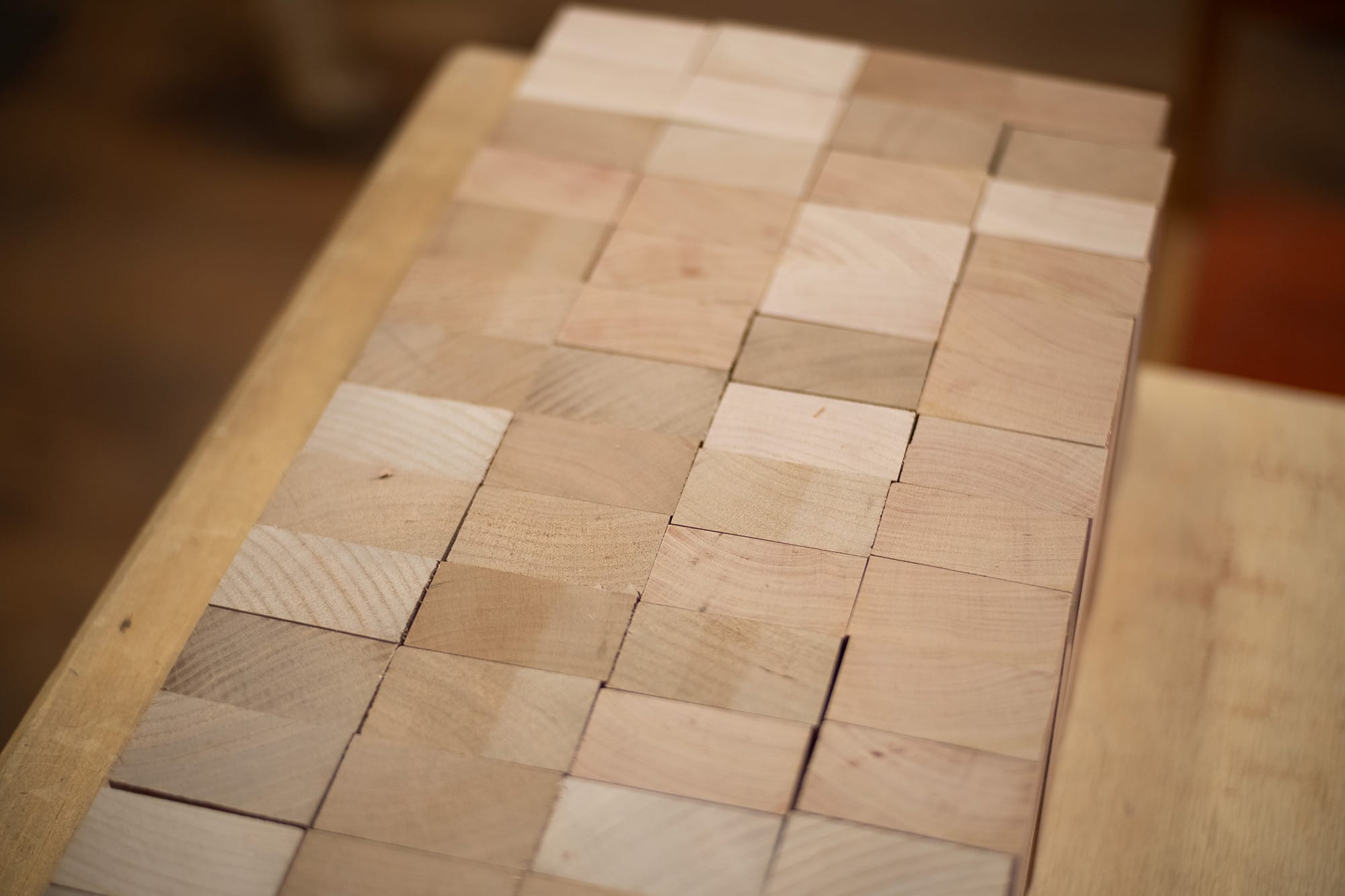
I also check the grain orientation. It's best to keep each block consistent in a batch, that way all of the blocks will shrink or contract in the same way while I'm working on them.
Through seasonal changes, blocks will shrink or expand as much as .005 - .010". A piece of paper is around .003" thick. It's not much, but errors can add up through the process. At this point it's best to bake in as much perfection as possible.
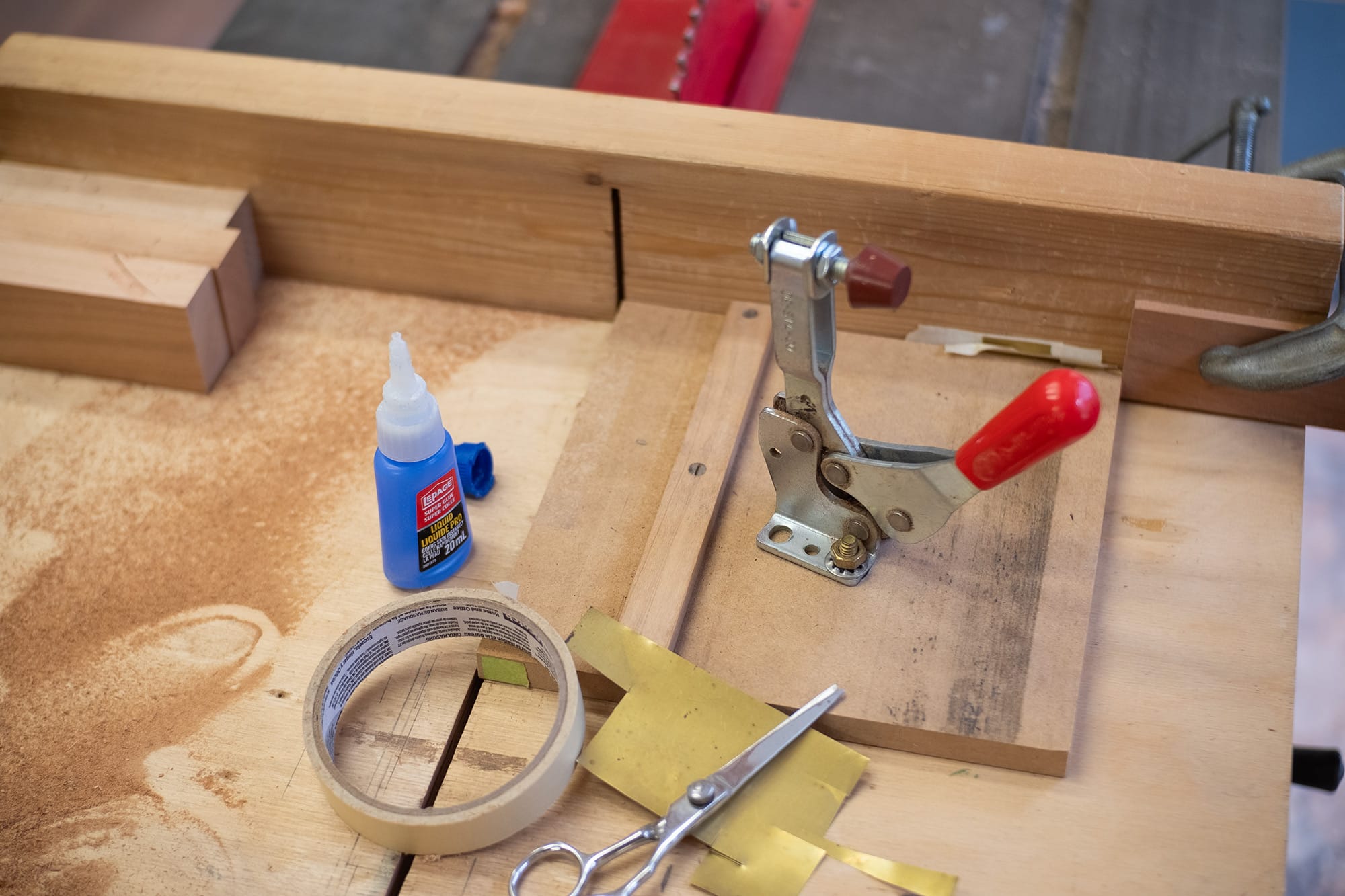
This is the jig I use to trim the width of each block. Tape and brass shims give me the precision I need. If you can't make a jig perfect, at least make it adjustable.
This is just one of those times where I could have spent two days working on a fancy jig that might have, over it's lifetime, saved me 2 hours. You need to know when it's not worth it.
I use CA glue for setting up a lot of my jigs. In this case the entire jig is glued to my cross-cut sled. After I'm done making these cuts I'll pop the glue joint and clean off any glue residue with acetone. Eventually the glue destroys these wooden jigs, but they'll need refreshing every few years anyhow, so it's not too big of a deal.
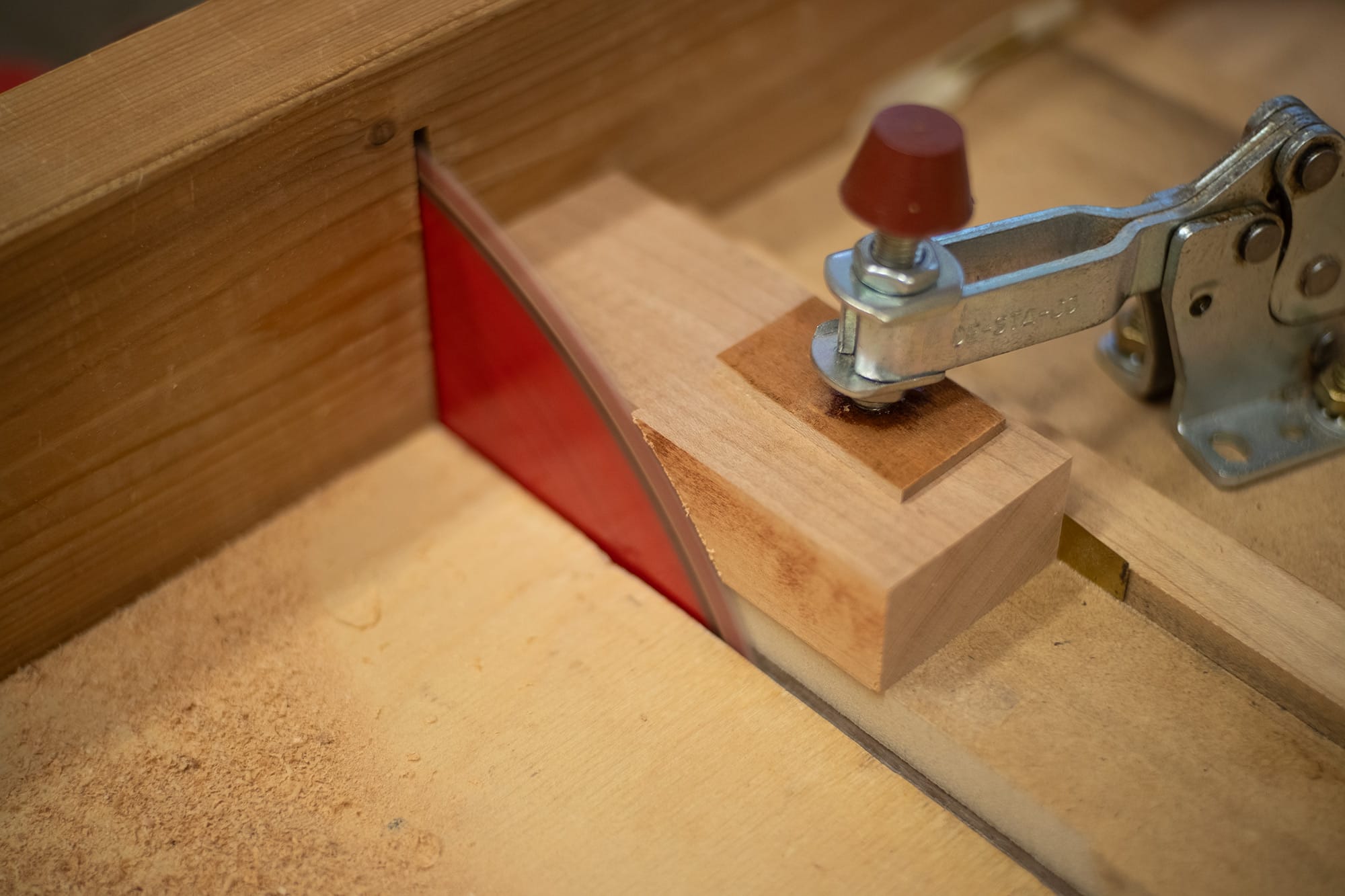
Trimming the first edge.
The table saw will get these blocks to within +- .005" of where they need to be, but it's not quite good enough. No matter how much time I tinker with this saw, I can't seem to get better than that. The issue I run into is repeatability. Slop in the sliding guides, blade flex, different wood density between blocks... just too many variables.
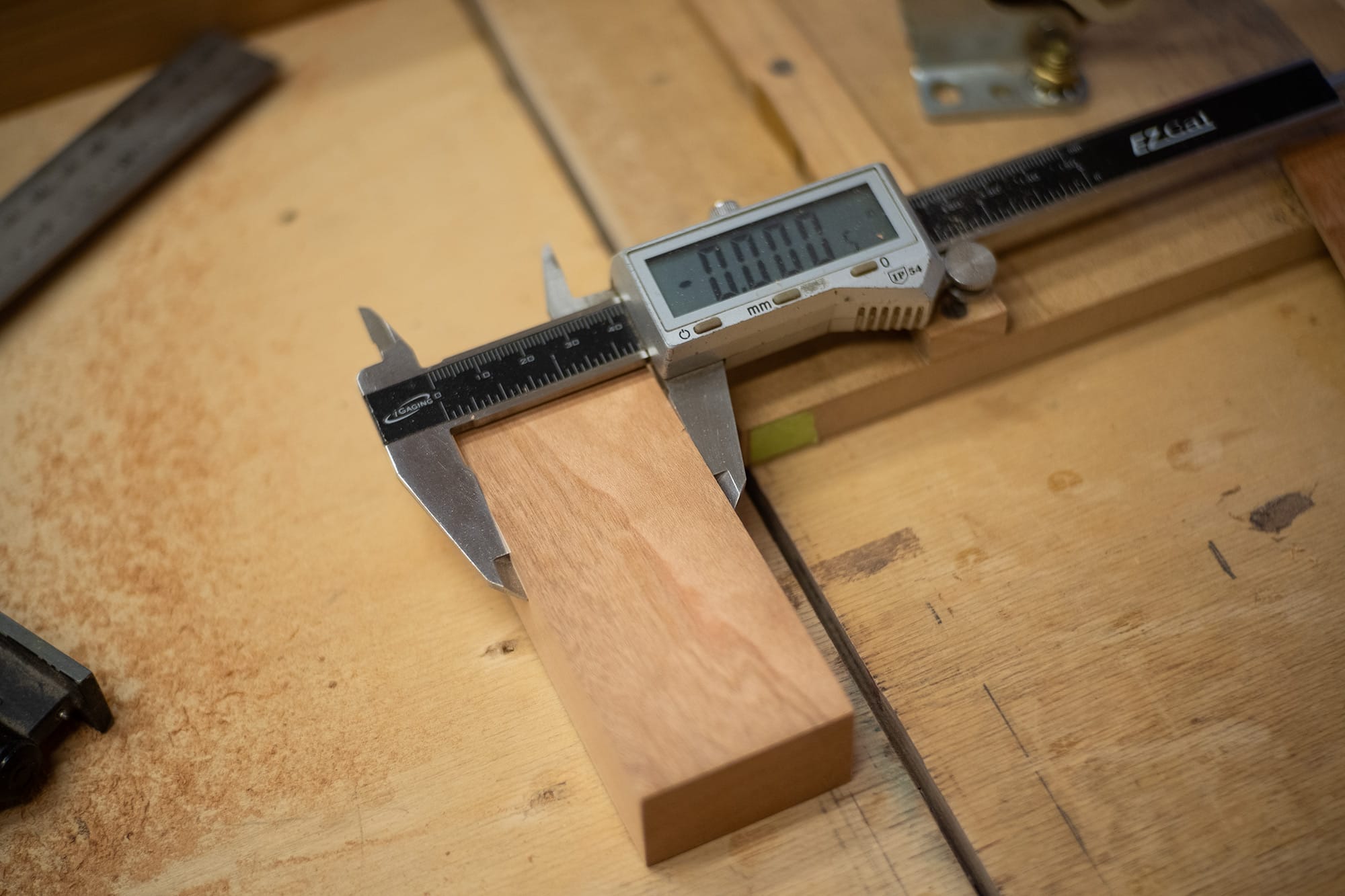
For now this is close enough to move onto a more precise tool.
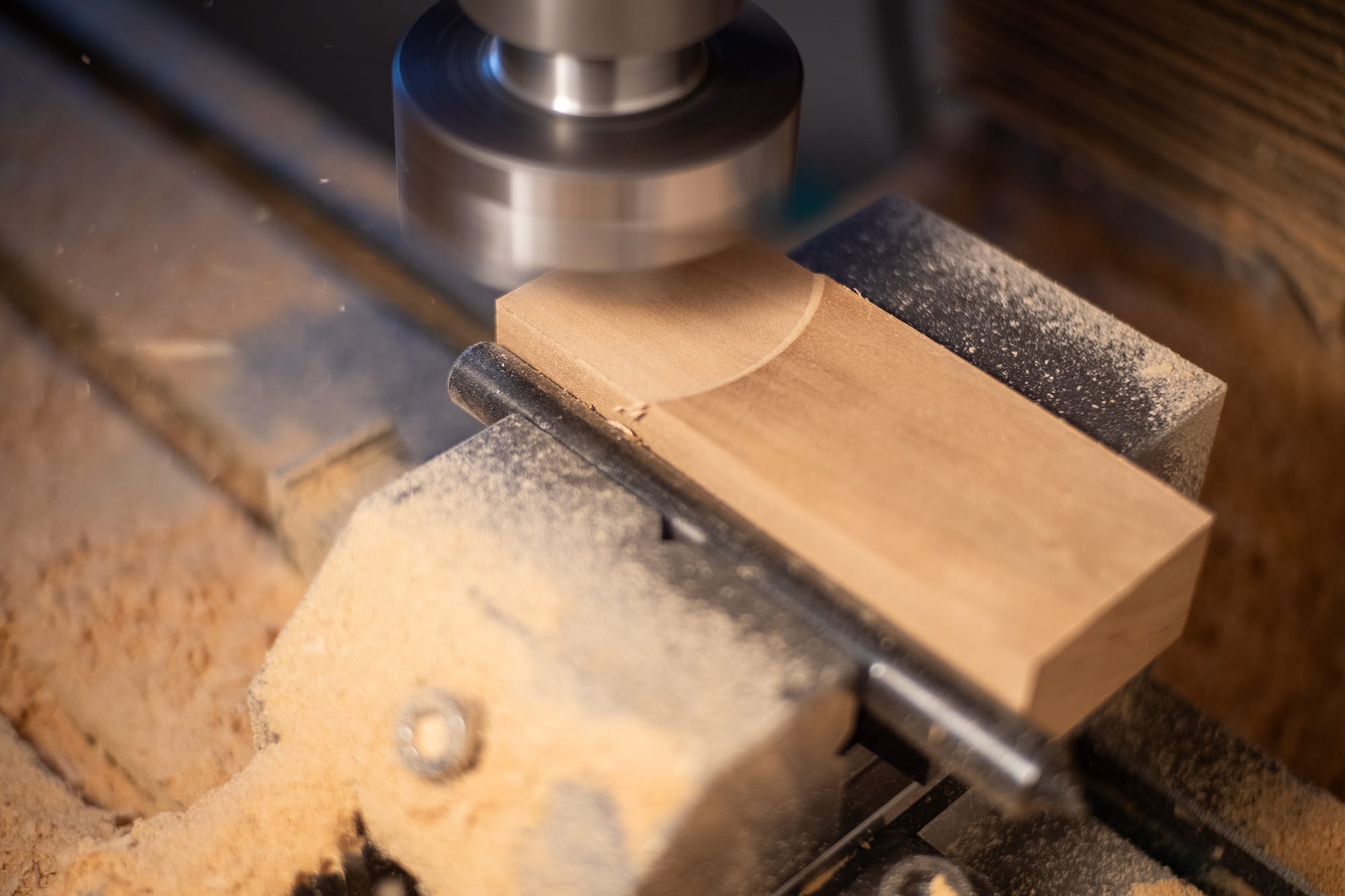
The blocks go over to the milling machine, where I use a razor sharp fly-cutter to skim off the surface. The vice holds each block perfectly square, so with each pass I not only achieve flatness, but also squareness to every other face.
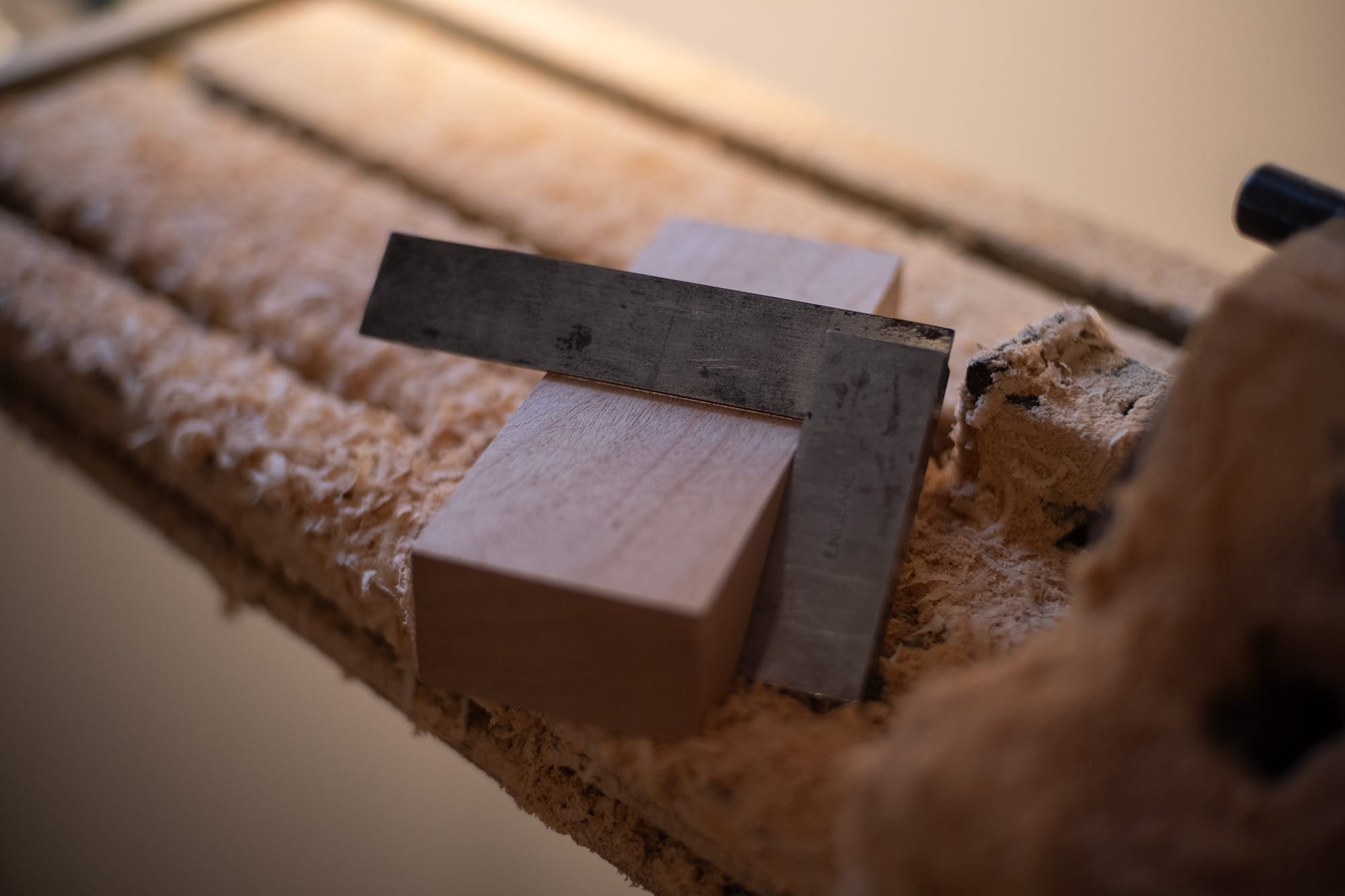
Perfectly square.
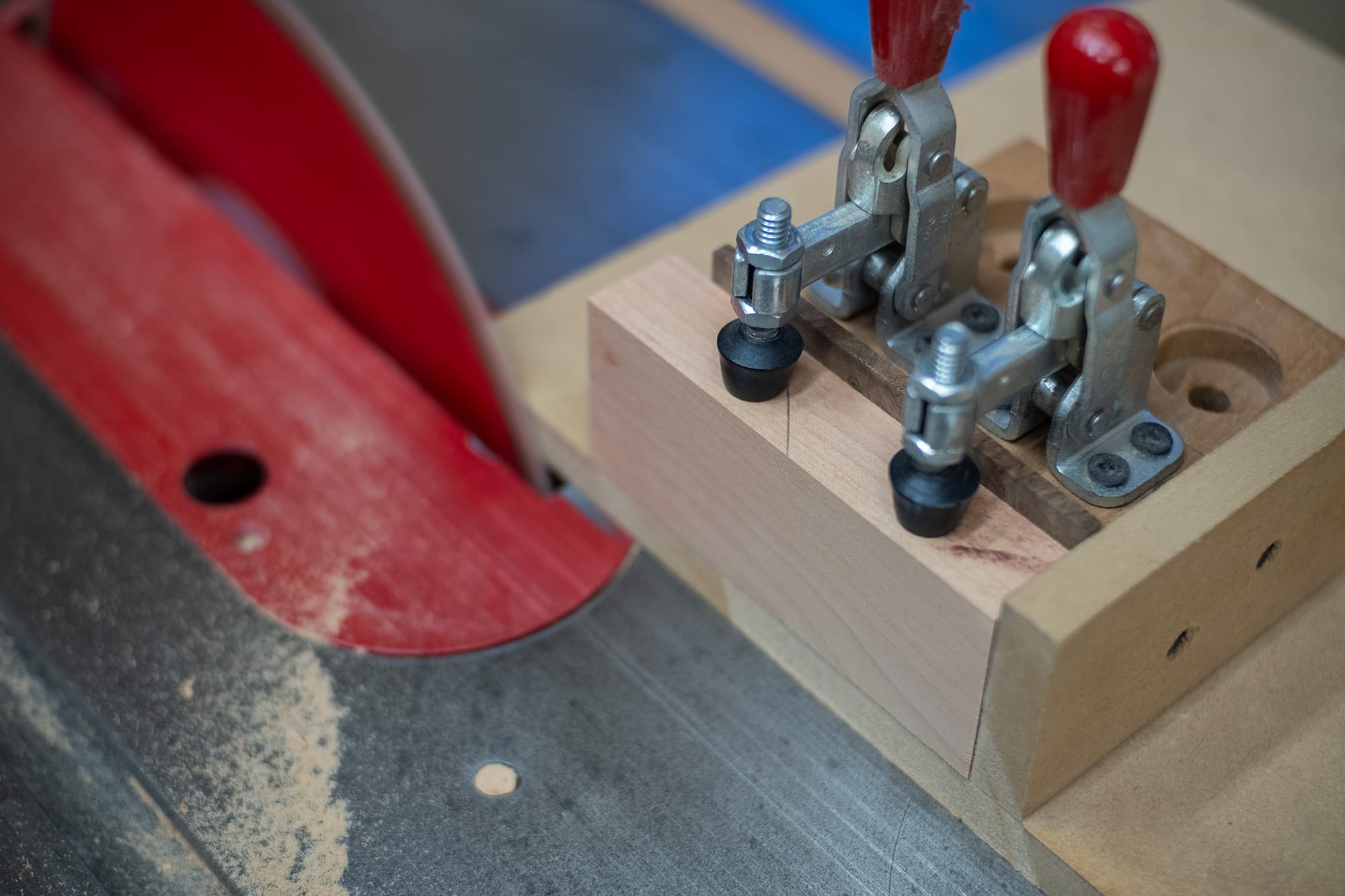
Now that we have two square and flat faces, we can go back to the table saw and mount the blocks into the next jig for trimming the third face.
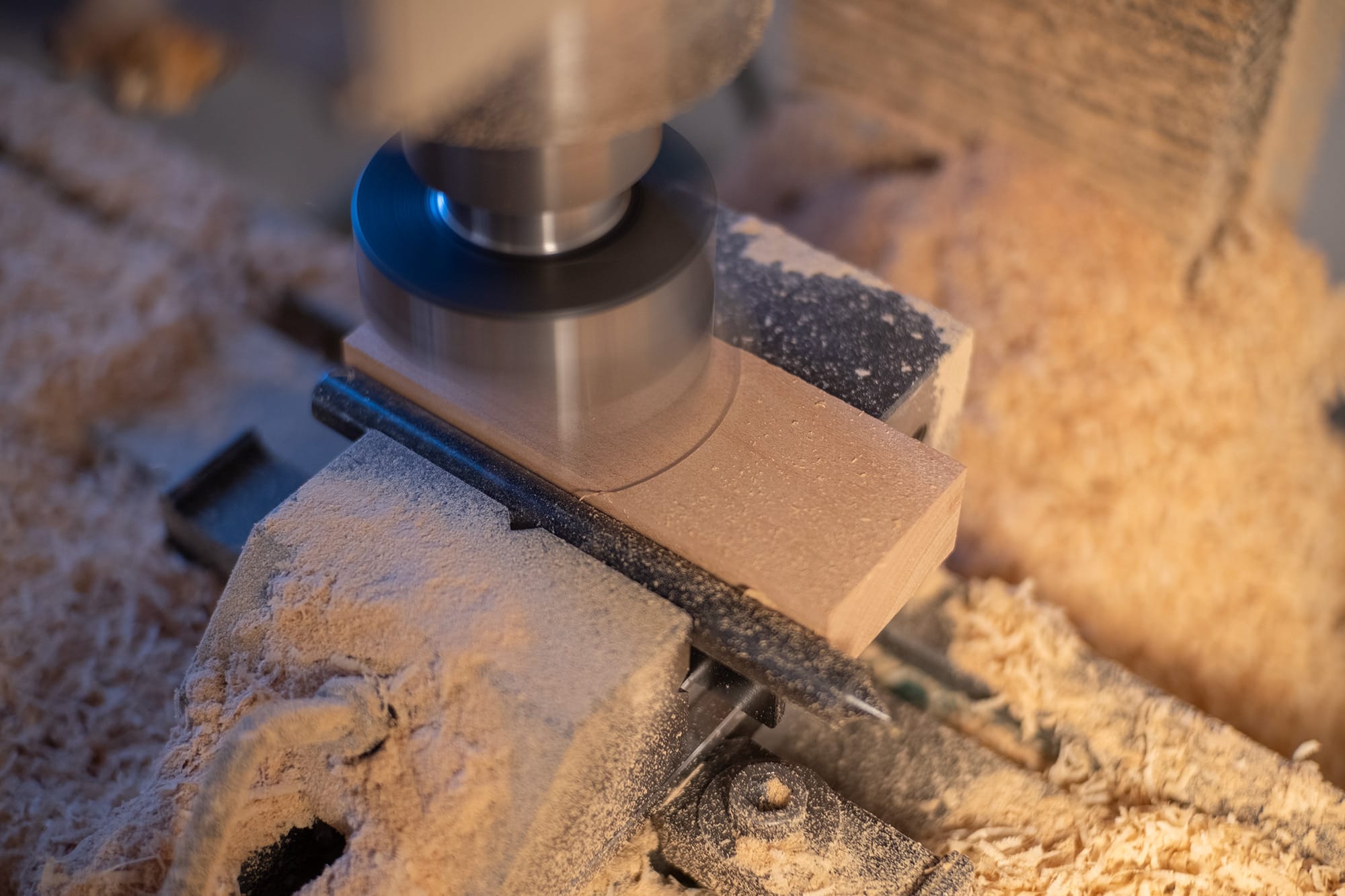
Now it's back to the mill for another skim pass, after which we will have three faces square and true.
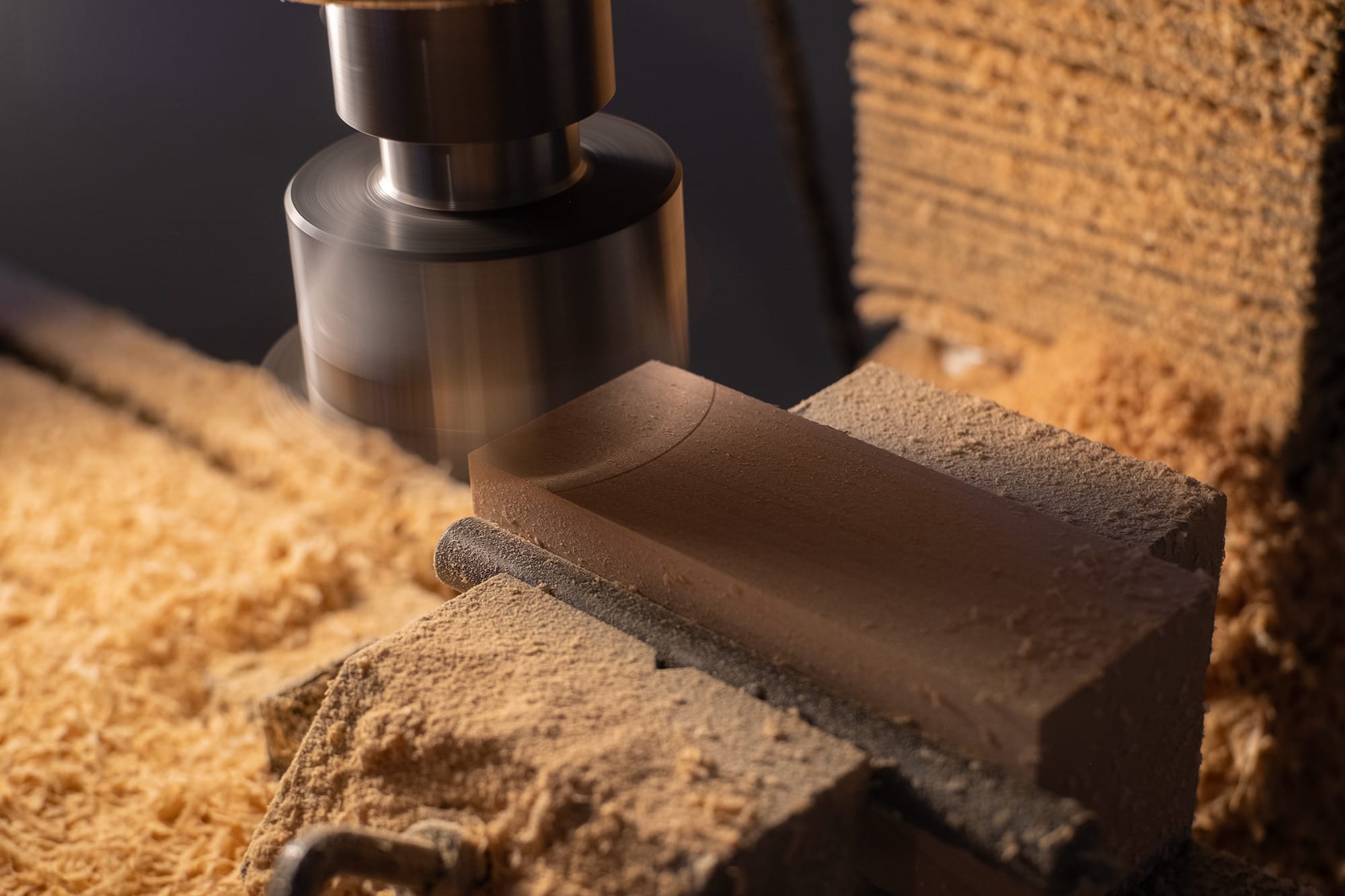
Finally the blocks are paired up and mounted back into the mill, this time with the final edge face being cut. Cutting these two at a time cuts the machining time in half for the whole batch.
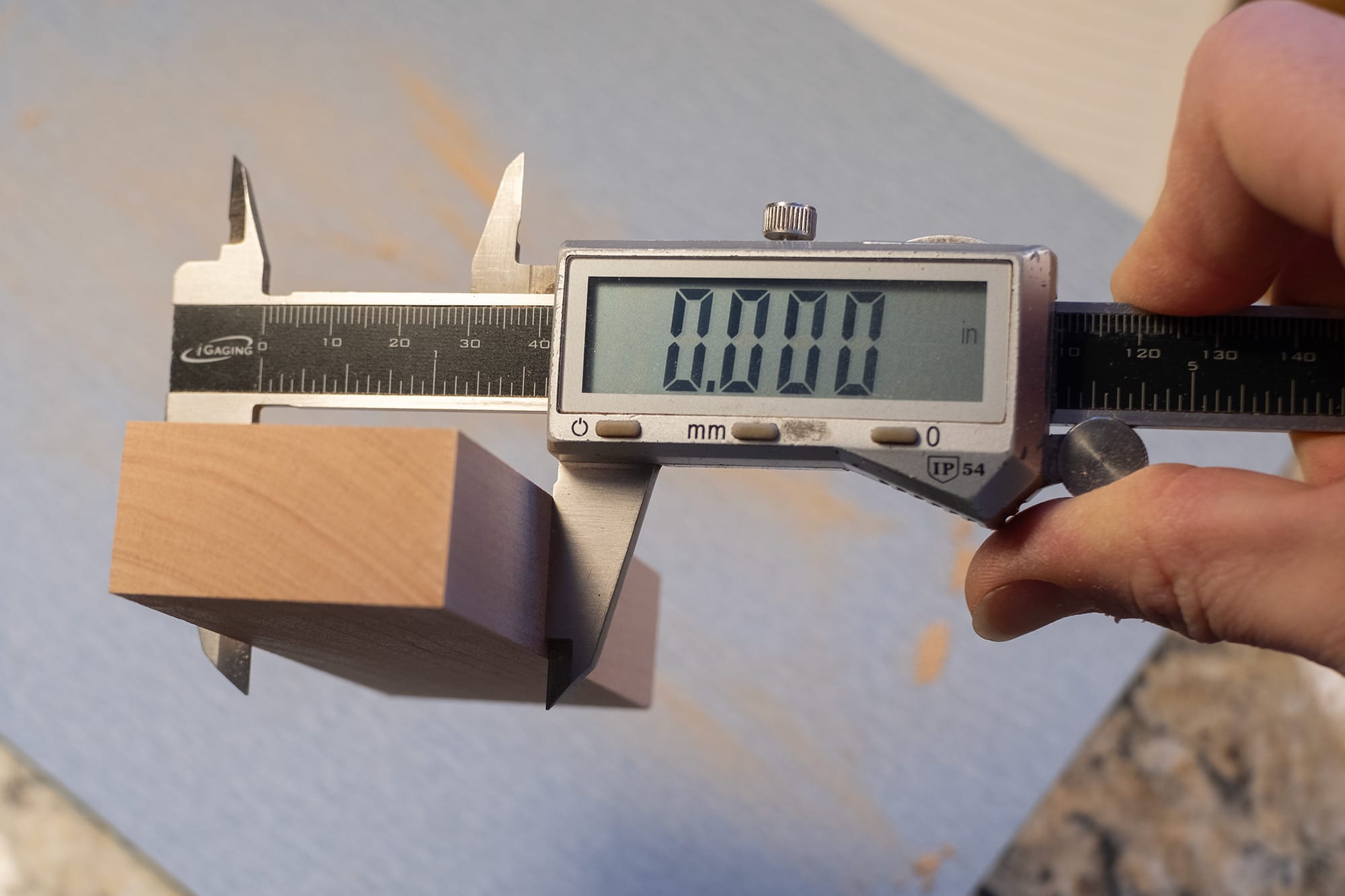
A perfectly square block, perfectly flat faces, finished dimensions. The mill will get these blocks to within +- 0.001", definitely good enough for me. With wood, getting any more precise than that is pretty much useless.
This level of precision now is what will allow each block to go smoothly through every step of the process, using production friendly methods the entire time. When every block is identical each crafting step can start with a setup phase, usually accounting for the bulk of the work, followed by a production phase where the jig or machine settings remain unchanged. This is the only way to do production work if you need repeatable, accurate, features.