Okin Craft 01
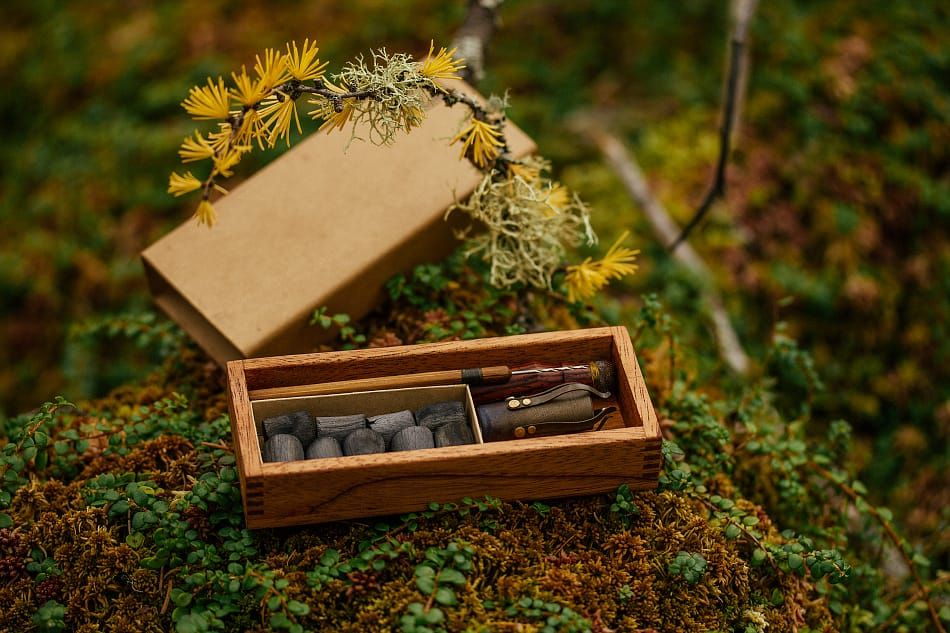
In 2015 I finalized the design of the Okin, a thermal extraction device powered by maple wood charcoal. In this series of articles I'll be showing the process of creating both the Okin and the special high carbon charcoal.
Here's a gallery of eye candy to wet the pallet.
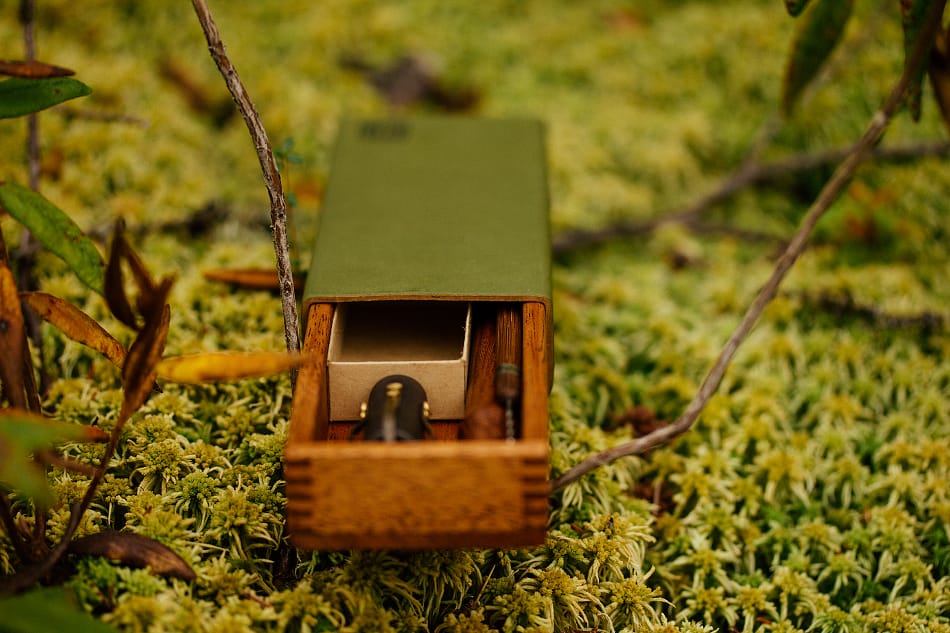
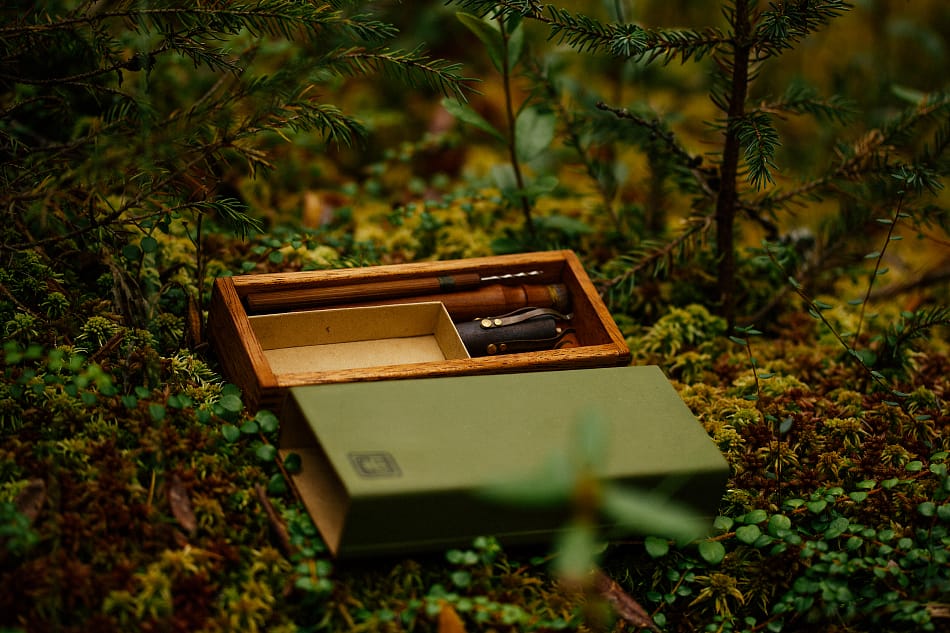
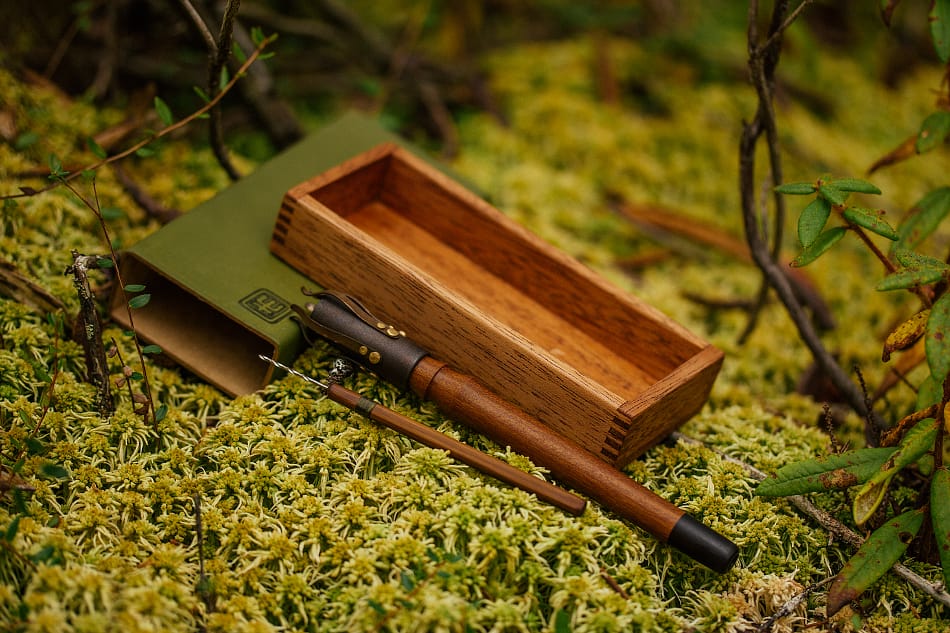
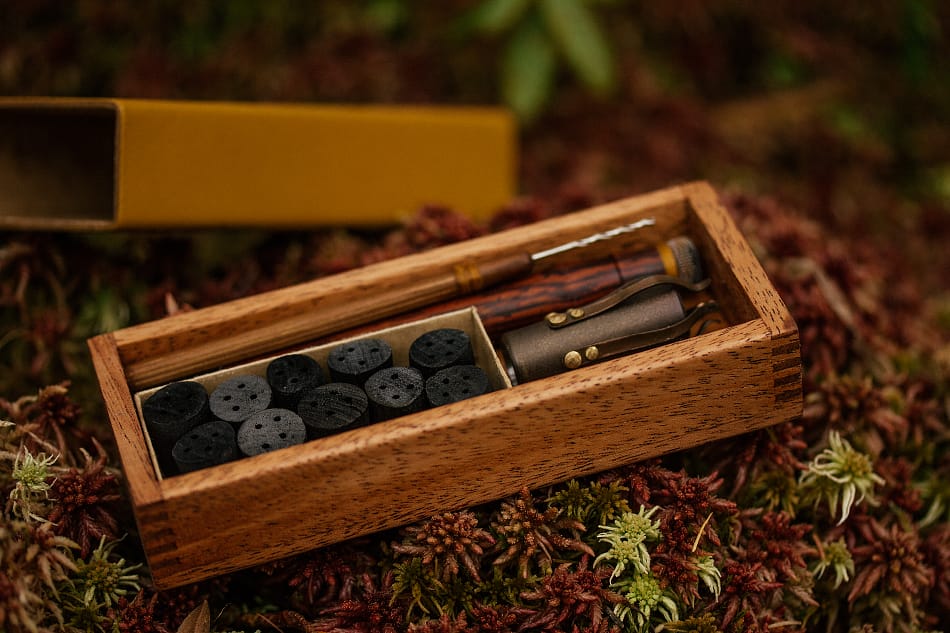
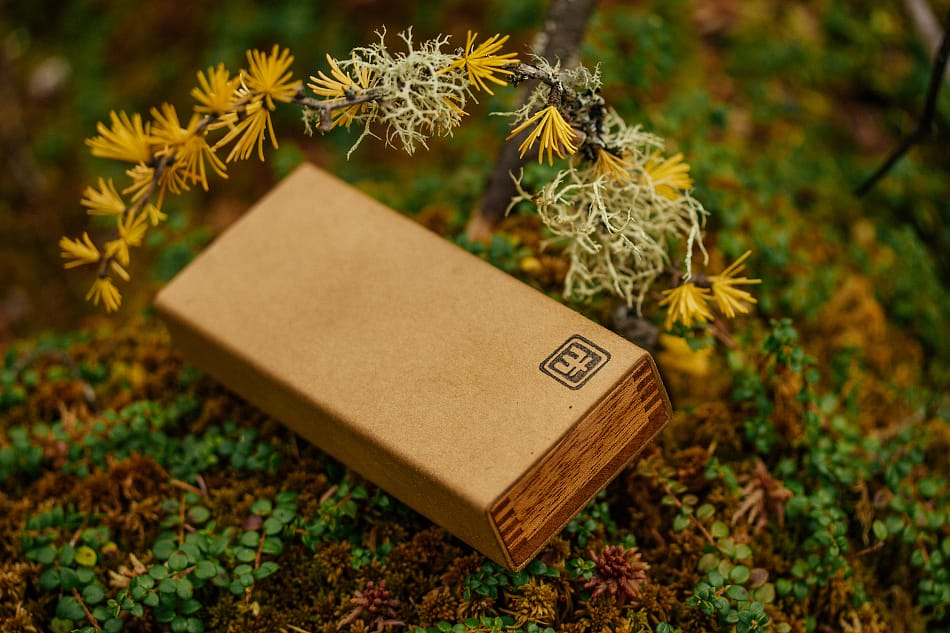
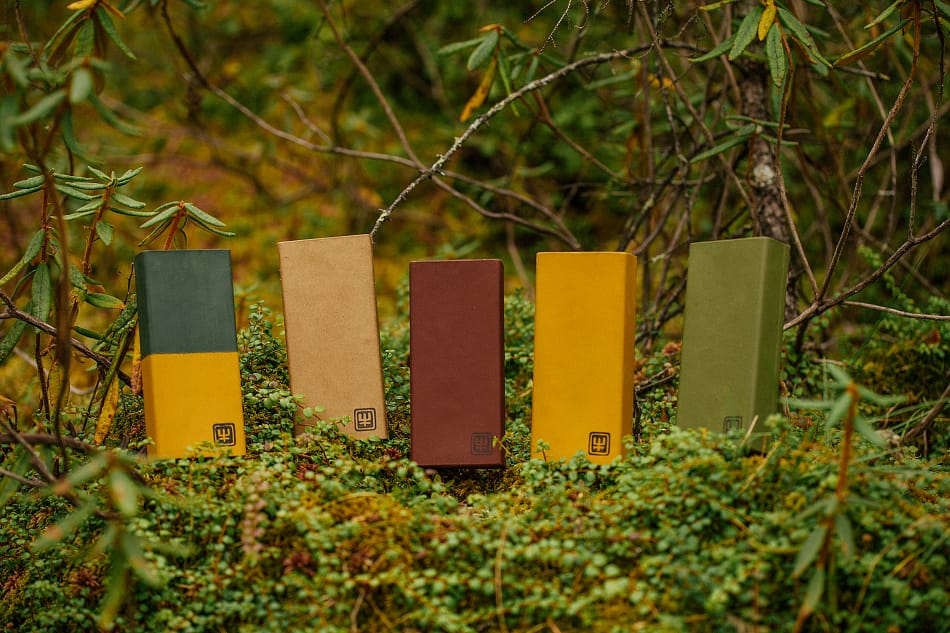
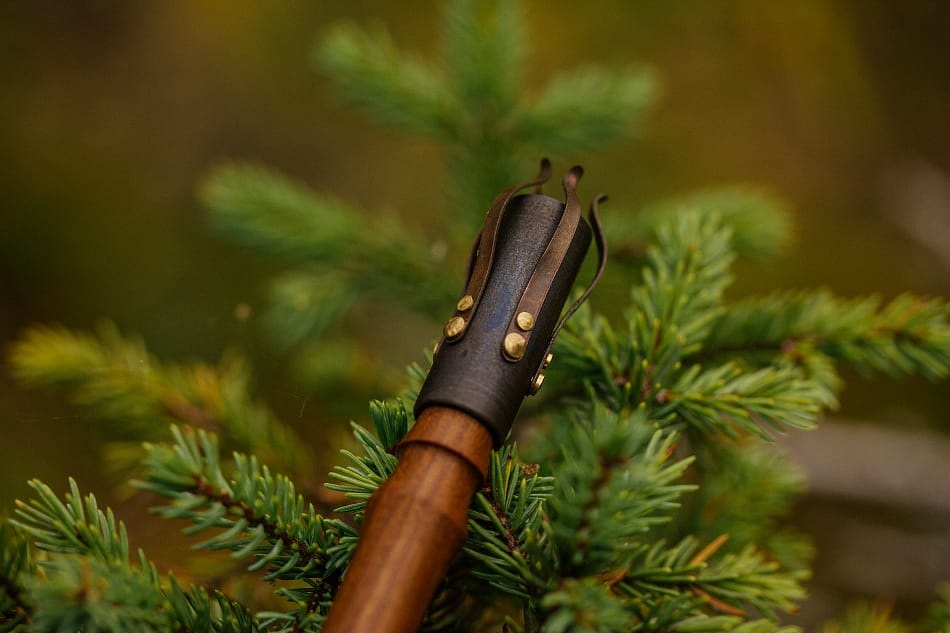
The Okin is housed in a mahogany box, complete with finger jointed corners and a wrapper of kraft paper composite. The Okin itself features a steel tip with phosphor bronze springs, brass screws, and a exotic wood stem. The set came with a tiny drill for making air-flow holes in the maple wood charcoals.
It's been 10 years since I made these, and looking back now I can definitely see areas for improvement... and yet, it also gives me a deep sense of longing. Perhaps for a simpler time in my crafting career where I was at the peak of my curiosity and completely unbothered by the realities of actually running a sustainable business. This was a time where I let my imagination reign supreme. Steff and I were living in a character filled farmhouse that was standing on borrowed time. The century old structure was literally crumbling down around us. We shared the house with squirrels, mice, cats, and toads, each having their own established area of the house where they had clearly been living in long before we arrived. The property was beautiful, the rent was cheap, and most importantly, the owner let us use the upper bedrooms for a workshop.

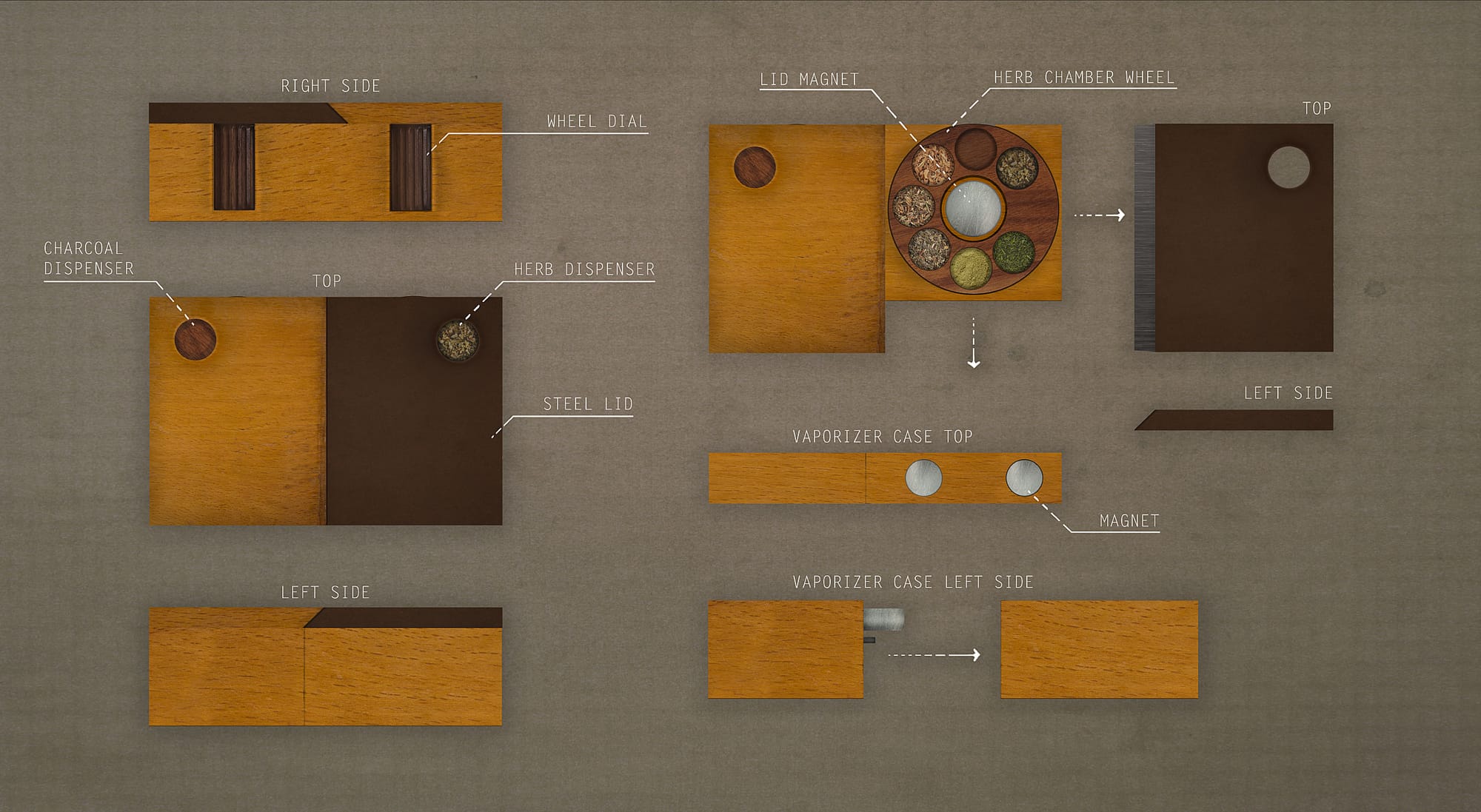
All my work starts with a heavy dose of conceptualization. At this time I was really into producing this style of highly polished design art. This boxy thing would eventually become the Okin, even though, at this point it really doesn't look anything like the finished product.
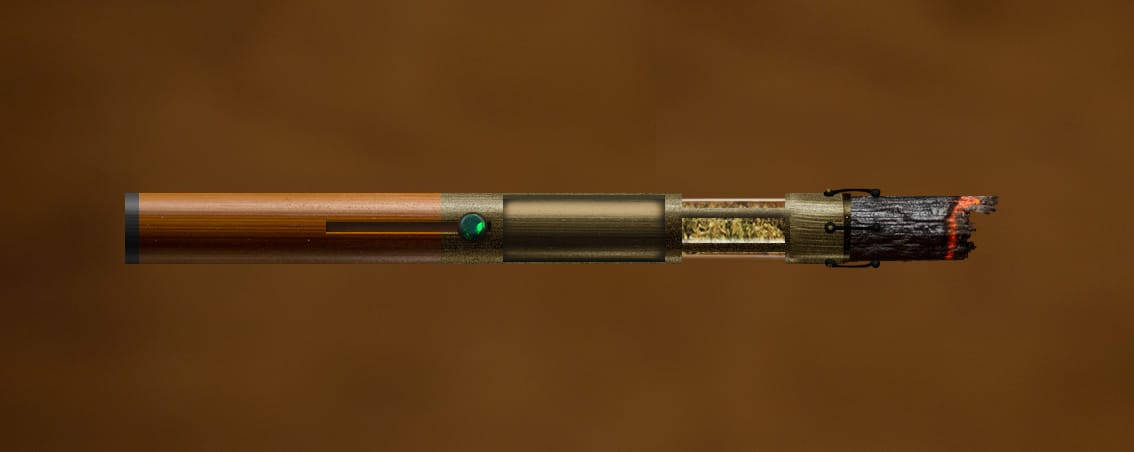
The first image that started to look a bit more like Okin-like.
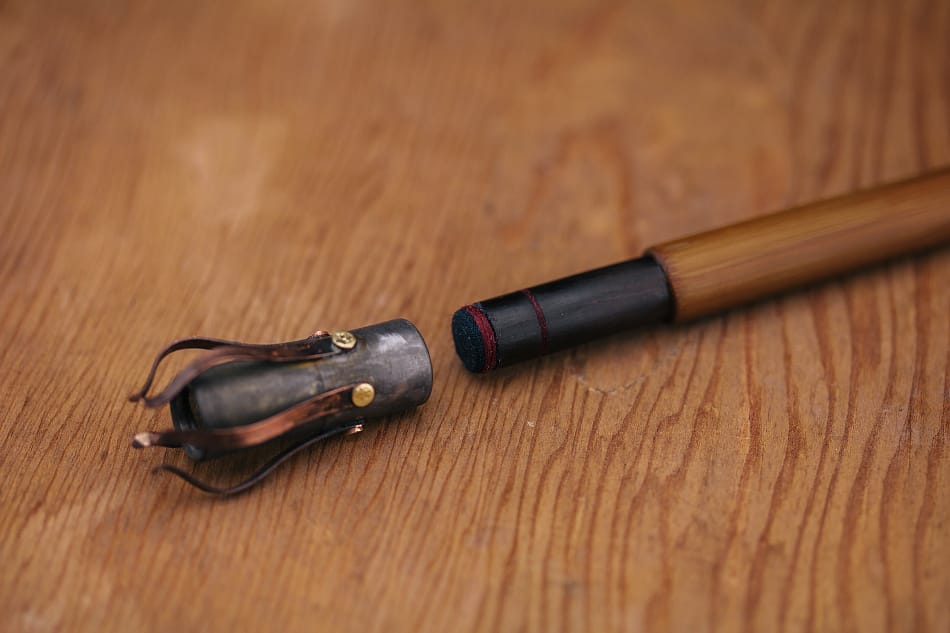
I think it was around 6 months in development, but this would have been near the tail end of that where I'm in the functional prototype phase. Still working out the kinks.
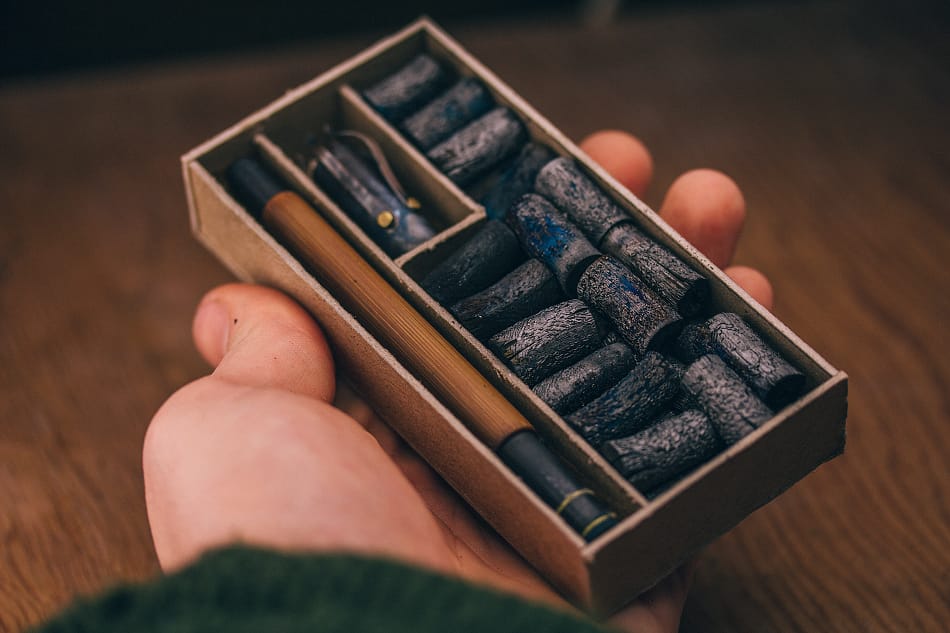
Paper and cardboard are a designers best friend. I use them to create physical models so that I can see how things feel in the hand.
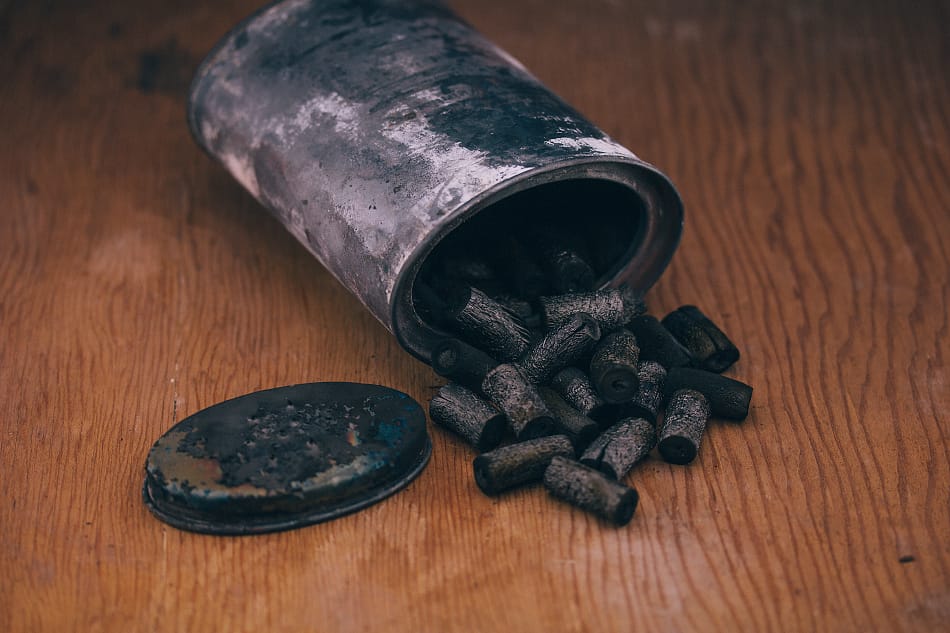
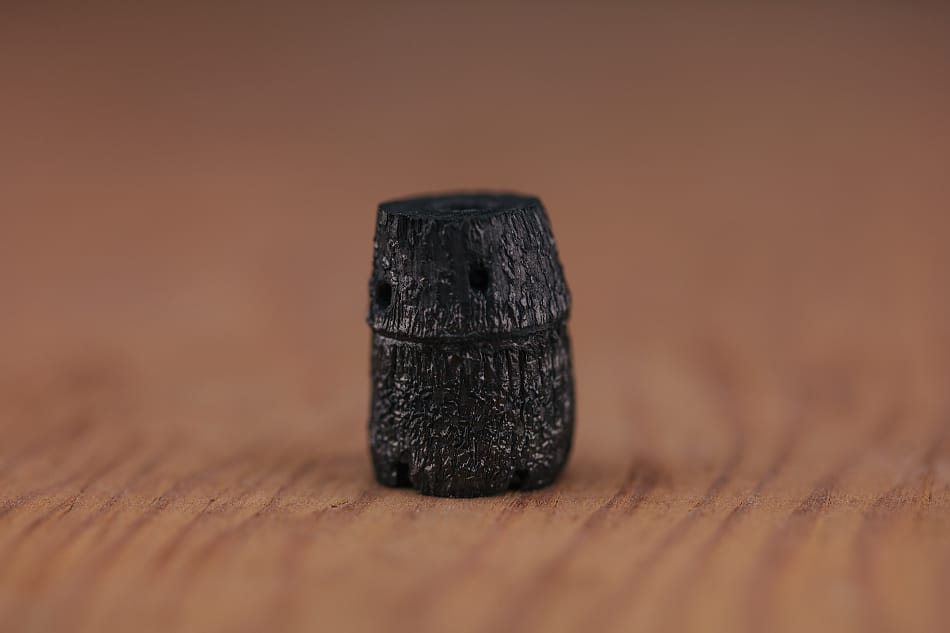
At this point I was still using bamboo as a charcoal source. After more testing I switched to maple, but the aesthetics of these early charcoals still look super neat to me. It's a shame I couldn't get them to work as well as the maple.
In my research I identified a handful of suitable woods. After testing all of them, maple came out on top. The maple wood was easy to source, produced solid charcoal with little deformation, and burned better.
My charcoal production methods were still crude at this point, using a steel tin over an open fire. With practice I got pretty good, but it was nowhere near consistent enough for production runs. In future articles I'll go over how I eventually learned to produce much higher quality charcoal in a custom electric kiln setup.
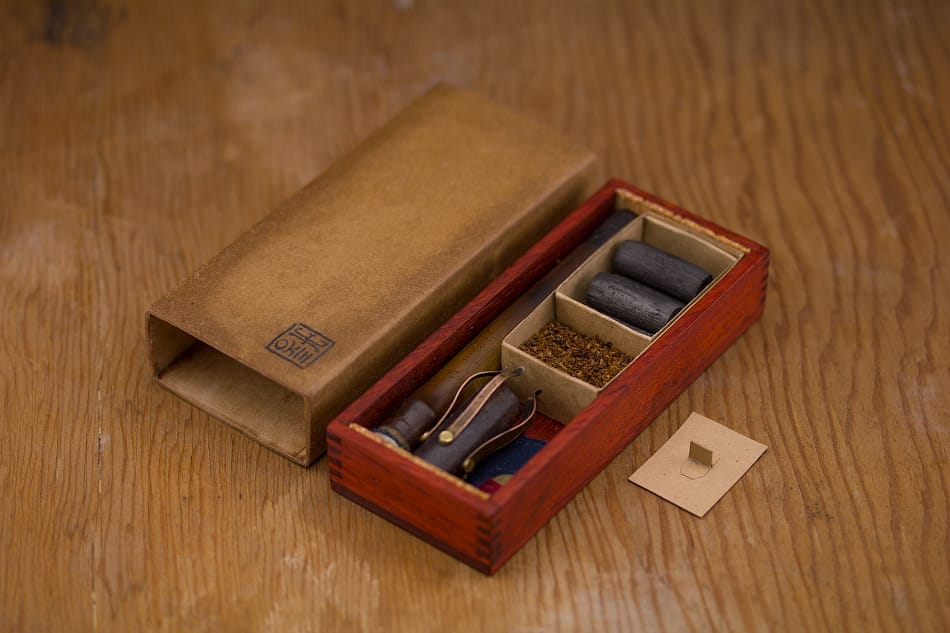
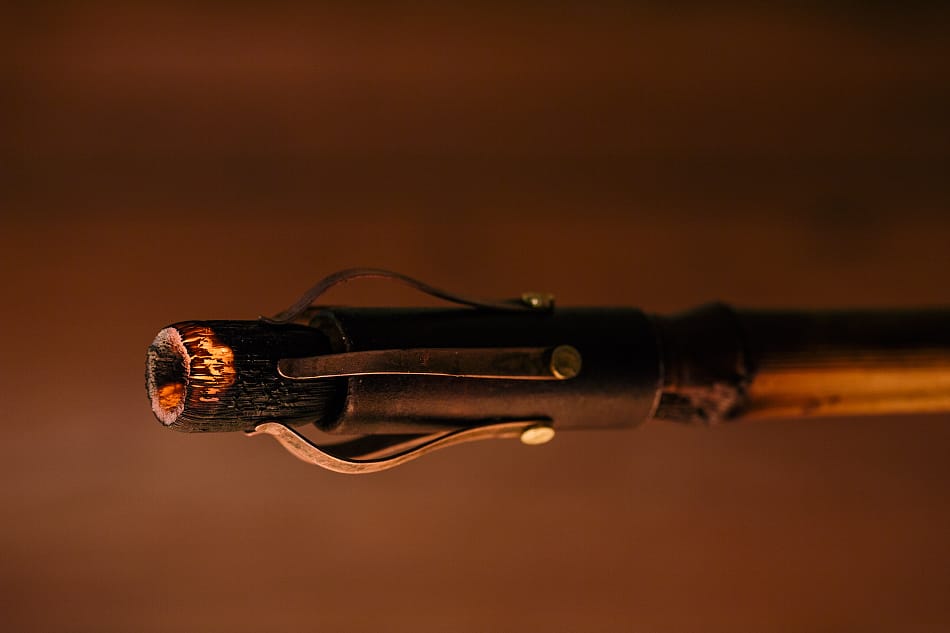
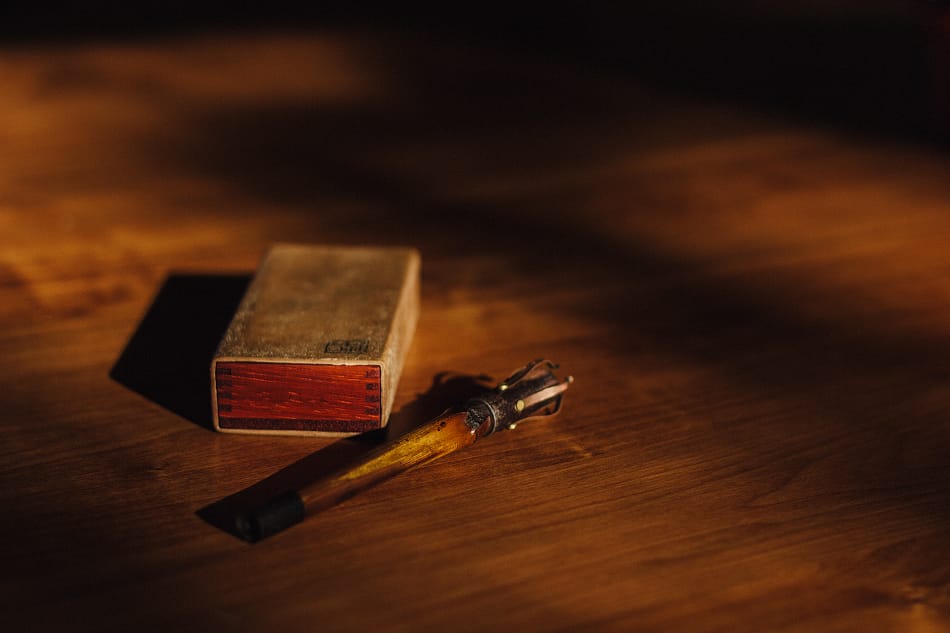
The first Okin was eventually born. It was still quite rough around the edges, and a production-ready model would see several changes, but the basic design is complete.
In the next article I'll be setting off at the start of the production process.